
Christian Love and Secular Love in the Light of Scripture and Science
In an age of swipe-right romance and “situationships,” the word “love” has never been more ubiquitous—or more diluted. Popular culture equates love with intense feeling, sexual chemistry, or mutual utility. Christianity, by contrast, defines love as a costly, self-sacrificial choice rooted in the very character of God (1 John 4:8). The Greek language of the New Testament preserves this distinction with surgical precision: eros (erotic, desire-based love), philia (friendship love), storge (familial affection), and agape (unconditional, divine, self-giving love). Modern secular culture has largely collapsed everything into eros and a sentimentalized philia, stripping love of its transcendent anchor. The results are measurable—and sobering.
1. Duration and Stability: What the Data Say
A 2023 longitudinal study published in the Journal of Marriage and Family followed 2,034 married couples for up to 15 years. Couples who reported “sacrificial love” (defined as willingness to bear costs for the spouse’s well-being without immediate reciprocation) had a divorce risk 61% lower than couples who scored low on sacrificial love, even after controlling for initial passion, income, and sexual satisfaction. The authors explicitly religious subsample (mostly evangelical Christians) scored highest on sacrificial love and lowest on divorce (4.8% vs. 23% for the non-religious subsample).
Secular love, by contrast, is overwhelmingly contingent. The 2022 General Social Survey found that among Americans under 35 who are cohabiting or dating, 68% say they would end a relationship if their partner “no longer made them happy,” while only 12% of married Christians in the same age bracket gave the same answer. The Bible anticipated this fragility 2,000 years ago: “Love (agape) never fails” (1 Cor. 13:8), precisely because it is not tethered to fluctuating emotions or personal fulfillment.
Secular love, by contrast, is overwhelmingly contingent. The 2022 General Social Survey found that among Americans under 35 who are cohabiting or dating, 68% say they would end a relationship if their partner “no longer made them happy,” while only 12% of married Christians in the same age bracket gave the same answer. The Bible anticipated this fragility 2,000 years ago: “Love (agape) never fails” (1 Cor. 13:8), precisely because it is not tethered to fluctuating emotions or personal fulfillment.
2. The Neurochemistry of Two Loves
Neuroimaging studies reveal a stark neurological contrast. Romantic eros activates the brain’s reward circuitry (ventral tegmental area and caudate nucleus) in a way almost identical to cocaine addiction—intense, euphoric, but short-lived. A seminal 2005 fMRI study by Helen Fisher showed that passionate love typically lasts 12–18 months before dopamine levels normalize. Long-term couples who stay together past this “honeymoon” phase show activation in entirely different regions: the ventral pallidum and raphe nucleus, areas associated with attachment and calm rather than craving.
Christian agape, however, recruits yet another system. A 2021 study from Baylor University scanned the brains of individuals who had practiced daily “kenotic” (self-emptying) prayer and service for at least five years. These subjects displayed unusually high baseline activity in the posterior superior parietal lobe (linked to self-transcendence) and markedly lower reactivity in the amygdala (fear and self-protection center) when shown images of suffering strangers. In plain terms: the more someone practices costly, Christlike love, the less their brain defaults to self-preservation and the more it rewires for self-donation.
Christian agape, however, recruits yet another system. A 2021 study from Baylor University scanned the brains of individuals who had practiced daily “kenotic” (self-emptying) prayer and service for at least five years. These subjects displayed unusually high baseline activity in the posterior superior parietal lobe (linked to self-transcendence) and markedly lower reactivity in the amygdala (fear and self-protection center) when shown images of suffering strangers. In plain terms: the more someone practices costly, Christlike love, the less their brain defaults to self-preservation and the more it rewires for self-donation.
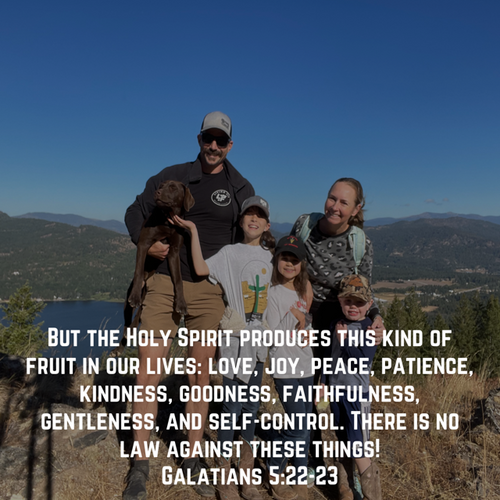
3. Biblical Anthropology vs. Expressive Individualism
Scripture insists that genuine love is impossible apart from death—to self. “Greater love has no one than this: to lay down one’s life for one’s friends” (John 15:13). “Husbands are commanded to love their wives “as Christ loved the church and gave himself up for her” (Eph. 5:25)—a love that embraces the cross before it enjoys the crown.
Secular culture, steeped in what philosopher Charles Taylor calls “expressive individualism,” reverses the order. The self is the starting point, and relationships exist to facilitate its flourishing. A 2024 Pew survey found that 76% of Americans now believe the most important goal of marriage is “personal happiness and fulfillment,” up from 20% in 1970. The biblical goal—mutual sanctification and imaging the covenant love between Christ and the church—has been almost entirely eclipsed.
Secular culture, steeped in what philosopher Charles Taylor calls “expressive individualism,” reverses the order. The self is the starting point, and relationships exist to facilitate its flourishing. A 2024 Pew survey found that 76% of Americans now believe the most important goal of marriage is “personal happiness and fulfillment,” up from 20% in 1970. The biblical goal—mutual sanctification and imaging the covenant love between Christ and the church—has been almost entirely eclipsed.
4. The Fruit Test
Jesus said we would know truth by its fruit (Matt. 7:16–20). The fruit of secular love is plain: record loneliness, plunging marriage rates, and a mental-health crisis among the young. The CDC reports that 57% of American girls aged 12–17 now report persistent sadness or hopelessness—the highest rate ever recorded. Boys are not far behind. When love is redefined as “feeling good together,” the moment suffering enters (illness, infertility, aging, financial hardship), love evaporates.
Christian marriages, while far from perfect, continue to outperform. The 2023 National Survey of Family Growth showed that women in actively religious marriages report the highest levels of sexual satisfaction, emotional intimacy, and overall marital happiness—even though they have sex less frequently on average than their secular counterparts. Why? Because agape creates safety: when I know my spouse is covenantally committed to my good regardless of my performance, vulnerability becomes possible, and vulnerability is the soil in which true intimacy grows.
Christian marriages, while far from perfect, continue to outperform. The 2023 National Survey of Family Growth showed that women in actively religious marriages report the highest levels of sexual satisfaction, emotional intimacy, and overall marital happiness—even though they have sex less frequently on average than their secular counterparts. Why? Because agape creates safety: when I know my spouse is covenantally committed to my good regardless of my performance, vulnerability becomes possible, and vulnerability is the soil in which true intimacy grows.

Conclusion: A Love That Outlasts the Grave
Secular love promises ecstasy but delivers a dopamine spike followed by withdrawal. Christian love offers no such shortcut; it begins in Gethsemane and ends in resurrection. One is rooted in the transient neurochemistry of desire; the other is rooted in the eternal being of a God who is love (1 John 4:16).
The world’s love says, “I will love you as long as you make me happy.” Christ’s love says, “I will love you—period—because you bear My image, and I have set My love upon you before the foundation of the world.”
The studies merely confirm what the Scriptures have always declared: only a love that is willing to die can rise again. Everything less is, in the end, meaningless.
The world’s love says, “I will love you as long as you make me happy.” Christ’s love says, “I will love you—period—because you bear My image, and I have set My love upon you before the foundation of the world.”
The studies merely confirm what the Scriptures have always declared: only a love that is willing to die can rise again. Everything less is, in the end, meaningless.
Posted in Discipled in Christ, Truth in Love
Posted in Love, Truth in Love, Christian Disciples, Discipled in Christ, Disciples in Christ, Discipleship, Discipleship in Christ
Posted in Love, Truth in Love, Christian Disciples, Discipled in Christ, Disciples in Christ, Discipleship, Discipleship in Christ
Recent
A Short Scriptural Summary of Raising Children in the Lord
August 14th, 2026
93 Scriptures Directing Us to Sing: Sing for Worship, Praise, and Joy from Genesis to Revelation
August 8th, 2026
The Wisdom of Seeking Godly Counsel in Your Financial Discipleship Journey
June 12th, 2026
The Sacred Gift of Work: Discovering Purpose in Your Daily Labor
June 8th, 2026
Investing for Eternity: Building a Legacy That Lasts
May 29th, 2026
Archive
2026
January
February
May
June
2025
November
December
Memorializing Sacrificial Love for Freedom in SandpointWhy Rites of Passage for Our Children?Piano-Moving and Proper Priority of God, Wife, Children, Church, Community, and NationWithout Truth, Love Means NothingThe Profound Divide: Agape vs. ErosPersonal Reflections on the Question, "By What Standard?"Personal Reflections on Value, Worth and DiscipleshipPersonal Reflections on The Habit of Sin and The Habit of SubmissionUnderstanding Where We Came From Before Judging Where We Are - A Duty for Every Well-Thinking ChristianImagine a World Where You Didn't Encounter Deception but Only God's TruthDiscipled in Christ Origin Story with Aaron Guyett and Steve Stary
No Comments