
When was the last time you truly considered who owns everything you have? Not in a legal sense, but in an eternal one. The clothes hanging in your closet, the car in your driveway, the money in your bank account—even the very breath you're taking right now. What if none of it actually belongs to you?
This isn't a depressing thought. It's actually the most liberating truth you could embrace when it comes to managing your finances.
This isn't a depressing thought. It's actually the most liberating truth you could embrace when it comes to managing your finances.
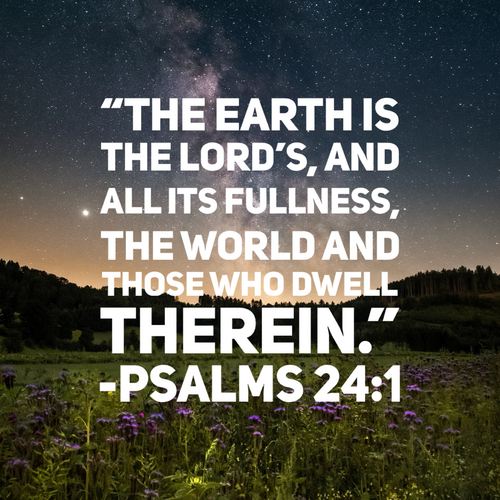
The Earth Is the Lord's
Psalm 24:1 declares with stunning simplicity: "The earth is the Lord's and all it contains, the world and those who live in it." Not some of it. Not most of it. All of it.
This single verse has the power to completely transform how we relate to money. When we truly grasp that God owns everything—including us—the pressure begins to lift. The anxiety about having enough starts to fade. The desperate grasping for more begins to loosen.
Think about it: if you're living in this world, and God owns all of it, then you are stewarding His resources, not your own. You're managing what belongs to Him. This shifts everything.
This single verse has the power to completely transform how we relate to money. When we truly grasp that God owns everything—including us—the pressure begins to lift. The anxiety about having enough starts to fade. The desperate grasping for more begins to loosen.
Think about it: if you're living in this world, and God owns all of it, then you are stewarding His resources, not your own. You're managing what belongs to Him. This shifts everything.
When Pressure Gets Too Thick
Life has a way of pressing in on us. The bills pile up. Unexpected expenses hit. You need diapers, or therapy for a child with special needs, or a belt to avoid getting a demerit at school. In these moments, remembering that "none of it's mine anyway" becomes more than theology—it becomes survival wisdom.
When you realize you're not the ultimate owner, you can humble yourself. You can make that phone call to a friend and say, "I'm in a jam." You can go to the lost and found. You can ask for help without shame because you understand that God provides through community, through unexpected sources, through means you hadn't considered.
This is where marriages grow stronger. This is where families are built. Not on the illusion of self-sufficiency, but on the humble recognition that we're all dependent on God's provision, working through various channels.
When you realize you're not the ultimate owner, you can humble yourself. You can make that phone call to a friend and say, "I'm in a jam." You can go to the lost and found. You can ask for help without shame because you understand that God provides through community, through unexpected sources, through means you hadn't considered.
This is where marriages grow stronger. This is where families are built. Not on the illusion of self-sufficiency, but on the humble recognition that we're all dependent on God's provision, working through various channels.
Click below to take our free course on this topic
The Truth About Riches and Honor
First Chronicles 29 contains David's powerful prayer as he prepares to build the temple. In verses 11-13, he declares: "Yours, O Lord, is the greatness and the power and the glory and the victory and the majesty, for all that is in the heavens and in the earth is yours. Yours is the kingdom, O Lord, and you are exalted as head above all. Both riches and honor come from you, and you rule over all."
Both riches and honor come from God. Not from your degree. Not from your employer. Not from your spouse or your social media following. From God alone.
We've been programmed to believe otherwise. We think riches come from education, from hard work, from networking, from being in the right place at the right time. And while God may use all these means, the source is still Him.
When you seek validation from human sources—from a paycheck, a title, a relationship status—you're setting yourself up for crushing disappointment. People will let you down. Systems will fail. Markets will crash. But God remains constant, and His provision continues.
Both riches and honor come from God. Not from your degree. Not from your employer. Not from your spouse or your social media following. From God alone.
We've been programmed to believe otherwise. We think riches come from education, from hard work, from networking, from being in the right place at the right time. And while God may use all these means, the source is still Him.
When you seek validation from human sources—from a paycheck, a title, a relationship status—you're setting yourself up for crushing disappointment. People will let you down. Systems will fail. Markets will crash. But God remains constant, and His provision continues.
The Parable That Changes Everything
Jesus told a story about a master who entrusted different amounts of money to three servants before leaving on a journey. To one he gave five talents, to another two, and to another one—each according to their ability.
The first two servants immediately went to work, investing and doubling what they'd been given. When the master returned, he commended them: "Well done, good and faithful servant. You were faithful with a few things, I will put you in charge of many things."
But the third servant, gripped by fear, buried his talent in the ground. His excuse? "I knew you to be a hard man, so I was afraid." The master's response was harsh: "You worthless, lazy slave... throw him into the outer darkness."
This parable reveals a stunning truth: God expects us to do something with what He's given us. Passivity isn't humility—it's disobedience. Hiding our resources out of fear isn't faithfulness—it's faithlessness.
The first two servants immediately went to work, investing and doubling what they'd been given. When the master returned, he commended them: "Well done, good and faithful servant. You were faithful with a few things, I will put you in charge of many things."
But the third servant, gripped by fear, buried his talent in the ground. His excuse? "I knew you to be a hard man, so I was afraid." The master's response was harsh: "You worthless, lazy slave... throw him into the outer darkness."
This parable reveals a stunning truth: God expects us to do something with what He's given us. Passivity isn't humility—it's disobedience. Hiding our resources out of fear isn't faithfulness—it's faithlessness.
Appreciating All Talents
Here's something we often miss: this parable isn't just about money. It's about all the gifts God has distributed—skills, abilities, time, relationships, opportunities.
Consider the plumber who keeps an entire school running while highly educated administrators stand helpless during a flood. His talent made room for him. His skill proved invaluable. God distributes different gifts to different people, and we need to appreciate them all.
You're not more valuable to God because you have a master's degree instead of a GED. You're not less important because you work with your hands instead of a computer. God has positioned each person strategically, giving them specific talents to steward for His glory.
The quarterback and the second-string player both matter. When your number is called, you need to be ready.
Consider the plumber who keeps an entire school running while highly educated administrators stand helpless during a flood. His talent made room for him. His skill proved invaluable. God distributes different gifts to different people, and we need to appreciate them all.
You're not more valuable to God because you have a master's degree instead of a GED. You're not less important because you work with your hands instead of a computer. God has positioned each person strategically, giving them specific talents to steward for His glory.
The quarterback and the second-string player both matter. When your number is called, you need to be ready.
The Practical Path Forward
So what does this look like practically? Start by taking inventory. Write down everything God has blessed you with—and I mean everything. The 24 hours you have today (the same amount Elon Musk has, the same amount anyone has). Your relationships. Your skills. Your material possessions. Your financial resources, whether abundant or scarce.
Then ask God: "How can I use these blessings You've given me to glorify You?"
This question transforms stewardship from burden to privilege. You're not trying to earn God's love through perfect money management. You're responding to His love by faithfully managing what He's entrusted to you.
Then ask God: "How can I use these blessings You've given me to glorify You?"
This question transforms stewardship from burden to privilege. You're not trying to earn God's love through perfect money management. You're responding to His love by faithfully managing what He's entrusted to you.
Freedom in Responsibility
When you truly grasp that God owns it all, you experience a paradox: you're simultaneously freed from the burden of ownership and given the responsibility of stewardship. You don't carry the weight of making it all work on your own, but you do carry the joy of worshiping the Lord with what He has given you.
This is where comparison dies. You stop measuring your five talents against someone else's ten. You stop despising your one talent because it's not five. You simply ask: "What has God given me, and how can I faithfully steward it for His glory?"
The truth will set you free. And the truth is this: you own nothing, but you've been entrusted with everything you need to fulfill God's purposes for your life. That's not a limitation—it's liberation.
This is where comparison dies. You stop measuring your five talents against someone else's ten. You stop despising your one talent because it's not five. You simply ask: "What has God given me, and how can I faithfully steward it for His glory?"
The truth will set you free. And the truth is this: you own nothing, but you've been entrusted with everything you need to fulfill God's purposes for your life. That's not a limitation—it's liberation.
Posted in Discipled in Christ, Financial Discipleship
Posted in Christian Disciples, Financial Discipleship
Posted in Christian Disciples, Financial Discipleship
Recent
A Short Scriptural Summary of Raising Children in the Lord
August 14th, 2026
93 Scriptures Directing Us to Sing: Sing for Worship, Praise, and Joy from Genesis to Revelation
August 8th, 2026
The Wisdom of Seeking Godly Counsel in Your Financial Discipleship Journey
June 12th, 2026
The Sacred Gift of Work: Discovering Purpose in Your Daily Labor
June 8th, 2026
Investing for Eternity: Building a Legacy That Lasts
May 29th, 2026
Archive
2026
January
February
May
June
2025
November
December
Memorializing Sacrificial Love for Freedom in SandpointWhy Rites of Passage for Our Children?Piano-Moving and Proper Priority of God, Wife, Children, Church, Community, and NationWithout Truth, Love Means NothingThe Profound Divide: Agape vs. ErosPersonal Reflections on the Question, "By What Standard?"Personal Reflections on Value, Worth and DiscipleshipPersonal Reflections on The Habit of Sin and The Habit of SubmissionUnderstanding Where We Came From Before Judging Where We Are - A Duty for Every Well-Thinking ChristianImagine a World Where You Didn't Encounter Deception but Only God's TruthDiscipled in Christ Origin Story with Aaron Guyett and Steve Stary
No Comments