
I used to fill in a Memento Mori Chart–as seen below–that showed how many days, weeks, and years I had left in my life. If I were to live to eighty, the memento mori chart was a great reminder of just how little time I had on this earth, and to make each day count. I stopped using it for two reasons. The first reason was because only God knows when I am going to die, so it seemed too assumptive of me to track toward an eventual outcome that I have zero clue as to when it is going to happen. The second reason was because I have had too many friends that died in their teens and twenties, which was yet another reminder that I don’t know, so is it proper for me to assume a countdown as if I did know? However, the value of counting our time left on earth came rushing back when I was reading Knowing Christ by Mark Jones. In reference to Psalm 90, specifically verse 12, he points out that Jesus Christ “numbered his days as he contemplated the fleeting character of his earthly life, and he made every day count.” (Jones, p. 87) When our days have been numbered by the God who gives and takes away, we realize how frail we are (Psalm 39:4). How should we spend our moments? How should we understand time, and God’s relation to time? This is an effort that works toward articulating what the Trinitarian holiness has created, by establishing time for His image bearers out of His eternal communion and attributes.

Creation Ex Nihilo
“In the beginning, ‘I am’ God”…Before the creation of the cosmos, including time, “I am.” At the burning bush, “I am” (Ex. 3:14). To Isaiah, “I am.” “Jesus states, ‘truly, truly, I say to you, before Abraham was, I am’”(Jn 8:58). In our Triune God’s self-existence, eternally, and infinitely, He is, or if it were stated by God,“I am.” The youngest member of the Westminster Assembly was George Gillespie, and he prayed, “God, thou art Spirit, infinite, eternal, and unchangeable, in your being, wisdom, power, holiness, justice, goodness, and truth,” and shortly after, this became the answer to question 4 of the shorter catechism and question 7 of the Larger Catechism (George paraphrased). Whether you are young or old, learned or slow, slave or free, jew or gentile, living Before Christ’s Common Era or in the Year of Our Lord’s Common Era, our Triune God is the Great I AM. He is the Alpha, existing before creation.
Before creation, when there was not one thing. No time. No space. No matter. God is. And He existed in perfect, holy communion, establishing and experiencing being, justice, goodness, truth, wisdom, power, and love. Then in the course of six days, He spoke the cosmos into being, intimately, orderly, and wonderfully. The cool of the morning was good. The look of the Garden of Eden was good. The walk with Adam was good. It was all very good. Time was good–very good, but time just like creation was not necessary.
Time was a condescension of God’s holy, holy, holy trinitarian perfection for His image-bearer Adam, and Adam’s wife, Eve, an image-bearer of God’s Holiness. Now, there is matter, space, and time to tell a story in the same way a dad sits at the edge of his children’s bed, and creates a character, plot, and setting that weaves a word-picture to bring meaning and value into the life of his child. The dad is not stuck in the chronology of his web, but is in fact eternal to it, painting truth, goodness, and beauty with strokes of courage, evil, and challenge through his oratory pleasure. The Father is intimately involved in His cosmos as well, while holding it all together in His transcendent glory–The Word.
“Therefore you spoke and they were made, and by your word you made them (Ps. 32:9, 6) “But how did you speak? Surely not in the way a voice came out of the cloud saying, ‘This is my beloved Son’ (Matt. 17:5). That voice is past and done with; it began and is ended. The syllables sounded and have passed away, the second after the first, the third after the second, and so on in order until, after all the others, the last one came, and after the last silence followed. Therefore it is clear and evident that the utterance came through the movement of some created thing, serving your eternal will but itself temporal. And these your words, made for temporal succession were reported by the external ear to the judicious mind whose internal ear is disposed to hear your eternal word. But that mind would compare these words, sounding in time, with your eternal word in silence, and say: ‘It is very different, the difference is enormous. The sounds are far inferior to me, and have no being, because they are fleeting and transient. But the word of my God is superior to me and abides for ever’ (Isa 40:8). (Augustine, Confessions, p. 225)
God the Father, and the Word, and Holy Spirit is the author of Adam’s life, naming, and offspring, yet Adam is breathing, taking dominion, and filling the earth by his personal will. Adam is perfectly submitted to God in the greatest glory, and Eve’s union with Adam, makes it even more glorious. With God’s creation, we see time as another one of God’s created constraints, purposing Adam and Eve the joy of establishing God’s image into the created order that God is singing in place. “Who hath wrought and done it, Calling the generations from the beginning? I the Lord, the first, And with the last; I am he.” (Is. 41:4) God establishes the first and the last, and so is the first and the last, intimately being the causal presence of being and the preserving power of being, yet is transcendent, unchanging and eternally holy, holy, holy.
Death Invocation
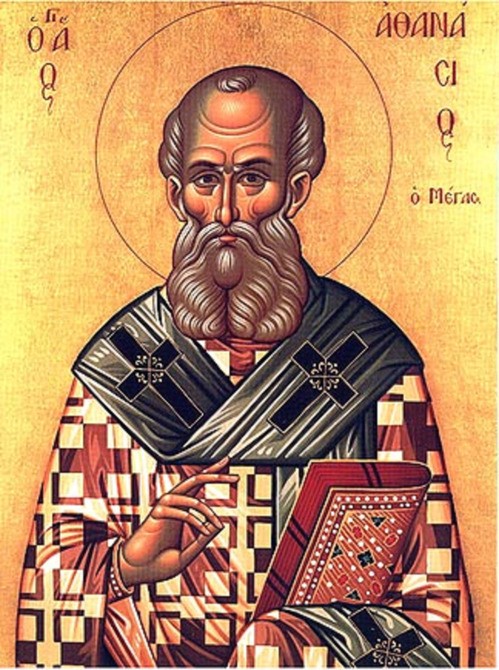
For if, out of a former normal state of non-existence, they were called into being by the Presence and loving-kindness of the Word, it followed naturally that when men were bereft of the knowledge of God and were turned back to what was not (for what is evil is not, but what is good is), they should, since they derive their being from God who IS, be everlastingly bereft even of being; in other words, that they should be disintegrated and abide in death and corruption. (Athanasius, p. 23)
And then the son of God, the head of man, made a choice, in time, to glorify his wife over God. The mother of all mankind chose, in time, to glorify a lie, over her husband and God. The flaming serpent, the deceiver chose, in time, to deceive the woman, destroy the Adam, and try to usurp God’s eternal, unchanging order on earth. All because of the lust of the flesh, the lust of the eyes, and the pride of life–Death was invoked, and the covenantal cursings filled time and space. Things have changed drastically for all of mankind, and the very good created order that the Word spoke into existence and sustains existence, has the baggage of turmoil, death, pain, and sweat. But God rested in His complete knowledge, perfect purposes, and eternal glory. This is just the beginning. He is Alpha before the fall.
For God has not only made us out of nothing; but He gave us freely, by the Grace of the Word, a life in correspondence with God. But men, having rejected things eternal, and, by counsel of the devil, turned to the things of corruption, became the cause of their own corruption in death, being, as I said before, by nature corruptible, but destined, by the grace following from partaking of the Word, to have escaped their natural state, had they remained good. (Athanasius, p. 24)
Death is invoked by Adam, Eve, and Satan, but with this death invocation by the fallen elohim and mankind, death is also invoked by God’s Word, proclaiming a seed with a bruised heel and a serpent with a crushed head. We humans often have problems with this death-filled formula, forgetting we serve an all-powerful, all-knowing, all-loving, all-just, all-good, and eternal God, which has set forth time in His creation to allow His eternal glory to play out in the fullest and most wondrous way. We put human constraints on God in time, and bid Him to fix it, forgetting to ponder His ways being higher than our ways (Is. 55:8-9). Eternality is a God-only perspective, and when we attempt to establish it, we fail miserably. Job and his wise counsel is a great example of our futility and finite problem. We try to establish truths and knowledge in time that are meant to be transcendent. Meanwhile, in our story, death’s invocation plays out in the Adamic lineage through rehearsals that point to the curse of sin and death that kinked the good and corrupted the heart, and also, point to the live-giving death of our conquering King of kings.
Death Rehearsals
Cain crushes his brother’s life, as pride crept in, but then Seth brings Noah, who is saved in Christ, the ark, pointing toward a future cleansed from sin and death by the flood waters of baptism. Joseph is brought toward his death in a pit by his brothers, falsely accused, imprisoned, and then in faith spoke God’s truth in order to be seated at the right hand of Pharoah, reconciling Israel through forgiveness. Moses crushes the head of his enemy prematurely, slaves to sin wrongfully accuse him, cast him out, and then he encounters the “I AM” to free the slaves, and kill the deceiver Pharoah with his army. David is the lowest of his family, anointed by Samuel, and kills the scale-wearing blasphemer Goliath, only to be wrongfully persecuted by Saul–who chased him and tried to usurp David’s blessing and his own cursing, until he perished by his own sword. Israel divides from Judah, and establishes kings that betray their eternal God, and given to their sin, they are conquered by Assyria 722 years Before Christ (BC). Judah, with 8 good kings peppered throughout its reign, ultimately reaping the harvest of their allegiance to sin and death with Babylonian exile in the 586th year Before Christ. Throughout this time there are multiple prophets proclaiming what will happen to them specifically, and what will happen to the nations of the world ultimately in Christ Jesus (Messianic King who is God with us). He is the Alpha before all the types pointing to Christ.
Lord, thou hast been our dwelling place in all generations. Before the mountains were brought forth, or ever thou hadst formed the earth and the world, even from everlasting to everlasting, thou art God. Thou turnest man to destruction; and sayest, Return, ye children of men. For a thousand years in thy sight are but as yesterday when it is past, and as a watch in the night. Thou carriest them away as with a flood; they are as a sleep: in the morning they are like grass which groweth up. In the morning it flourisheth, and groweth up; in the evening it is cut down, and withereth. For we are consumed by thine anger, and by thy wrath are we troubled. Thou hast set our iniquities before thee, our secret sins in the light of thy countenance. For all our days are passed away in thy wrath: we spend our years as a tale that is told. (Psalm 90:1-9)
Death In Christ
All of the types of Christ in the Old Testament create an unbearable weight to the God who is stuck in time. 351 prophecies fulfilled in Jesus Christ is uncalculably impossible–for a God that is bound by the time that He created. If we take just 8 prophecies from the Old Testament, the probability of this coming true is very conservatively 1 in 1017.
Let us try to visualize this chance. If you mark one of ten tickets, and place all of the tickets in a hat, and thoroughly stir them, and then ask a blindfolded man to draw one, his chance of getting the right ticket is one in ten. Suppose that we take 1017 silver dollars and lay them on the face of Texas. They will cover all of the state two feet deep. Now mark one of these silver dollars and stir the whole mass thoroughly, all over the state. Blindfold a man and tell him that he can travel as far as he wishes, but he must pick up one silver dollar and say that this is the right one. What chance would he have of getting the right one? Just the same chance that the prophets would have had of writing these eight prophecies and having them all come true in any one man, from their day to the present time, providing they wrote using their own wisdom. (Stoner, para. 38)
Yet, the Holy Trinity asserts His dominance over time and creation by establishing 351 prophecies from the Old Testament books. All 351 prophecies Jesus Christ fulfilled in a short 33 year span of time. God’s eternal glory is played out in real time, to redeem us from our curse of sin and death in real time, albeit chronologically later. He is the Alpha and the Omega in His death, burial and resurrection.
Because sin and death enters into time, it is also bound by time, yet somehow, Jesus Christ, before, during, and after His time on the cross is able to take upon Himself the sins of every person in Christ past, present and future. This is yet another impossibility if God is bound in time. He didn’t take on my sins metaphorically or symbolically, He took my sin of lying to my mother after Kindergarten at age 5, and your sin of stealing, and your sister’s sin of blasphemy, and your brother’s sin of lusting after pornographic material, and your mother’s sin of emotional manipulation, and your father’s sin of authoritarianism, and your daughter’s sin of rebellion, and your son’s sin of fearing man. Each sin of the Old Testament was atoned for in time by the sacrificial system which was established to point to Christ’s ultimate sacrifice. Somehow the bondage of time and sin is broken by Christ on the cross, which was a particular moment bound in time.
Jesus Christ is truly man in his suffering, death, and resurrected glory. Jesus Christ is also truly God, “the only-begotten Son of God, begotten of the Father before all worlds; God of God, Light of Light, very God of very God; begotten, not made, being of one substance with the Father, by whom all things were made” (Nicene Creed, excerpt). Being the second Adam, He established a new headship, in the lineage of Adam, Noah, Joseph, Moses, and David, bringing the curse to its completion in His death, all while fulfilling the types that were cast in God’s story of redemption. Eternally, God did not change one iota from when He created all things from nothing. God was not changed as His image-bearers changed their life to one with death. God was not changed as His chosen people crushed the heads of serpents while limping their way forward in time and rebellion. God still remains immutable as He then establishes perfection in the fulfillment of the covenant law, psalms, and prophets, establishing the healing of heaven on earth and the removal of the original sin cursings, only to be given a bruised heel in His betrayal, suffering, and crucifixion. He still has not changed as His will is done on earth as it is in Heaven. The creator of time, uses time to bring death to death with death–His ultimate death, which leads to resurrection in Him, “and the life of the world to come.”
Life In Christ
Jesus Christ is the first fruits of glorified, which is to say heavenified, creation and time (1 Cor. 15, Mt. 6, Heb. 5). Jesus Christ is not recognized by his own friends and disciples, and He is also not bound by the same time and space prerequisites that we are accustomed to in our natural state (Luke 24). In the midst of the greatest messianic let down, suddenly his disciples and the women that knew him and followed him, had their sorrow turned to joy. Even in the face of persecution from the Jewish elite and Roman Empire, the followers clung to the very Word of God, and grew in the face of friction and death. They were slaves under Rome and the Law in time, but free in Christ in time and eternally. Christ has ascended and is sitting at the right hand of the Father, and He has sent His helper, the Holy Spirit, to indwell each Christian, for our regeneration and sanctification. He is the Alpha and the Omega in His setting the captives free, His resurrection, His ascension, and His sitting at the right hand of the Father.
“We aren’t saved from time but in time” (Garner, p. vi). Because we are still in time, we have a Christian duty of life in Christ. “Wherefore we receiving a kingdom which cannot be moved, let us have grace, whereby we may serve God acceptably with reverence and godly fear: For our God is a consuming fire” (Heb. 12:28-29). Christ the King of kings and Lord of lords, the one with authority over heaven and earth, has sealed us in baptism with His covenant sign, and we move by faith through grace in His time, with His eternal promises as our foundation. “...Jesus is the Lord of history. He is Lord of time itself. All of creation–even the seasons and the passing years–points to the lordship of Jesus over all things” (Garner, p. i). By God’s grace, in faith, by the promises of the Holy Scriptures, through Jesus Christ and the power of the Holy Spirit, what we do in time matters. These thoughts, words, and actions in time are incarnate life rehearsals of His eternal and infinite attributes.
Life Rehearsals
The days of our years are threescore years and ten; and if by reason of strength they be fourscore years, yet is their strength labour and sorrow; for it is soon cut off, and we fly away. Who knoweth the power of thine anger? even according to thy fear, so is thy wrath. So teach us to number our days, that we may apply our hearts unto wisdom. Return, O Lord, how long? and let it repent thee concerning thy servants. O satisfy us early with thy mercy; that we may rejoice and be glad all our days. Make us glad according to the days wherein thou hast afflicted us, and the years wherein we have seen evil. Let thy work appear unto thy servants, and thy glory unto their children. And let the beauty of the Lord our God be upon us: and establish thou the work of our hands upon us; yea, the work of our hands establish thou it. (Psalm 90:10-17)
Marking time with His signs, sacraments, covenantal truths, and Word, is to establish deep into our bones and being, where we came from, to whom we belong, and where we are going.
God has committed a number of days to each of us. He expects us to be faithful stewards of those days. In light of the fleeting nature of our lives, the fact that we are like grass that shoots up and gets cut down, Moses prays, ‘teach us to number our days, that we may gain a heart of wisdom’ (Psalm 90:12). The faithful ought to care about time, to mark time, so that we can redeem time. Because time is precious, we must plan our time and not waste it. Moses prays, ‘satisfy us early with Your mercy, that we may rejoice and be glad all our days’ (v. 14), and ‘establish the work of our hands for us; yes, establish the work of our hands’ (v. 17). Here we see that time is redeemed in two ways: first, in rejoicing–in worship, in celebration, in festivity, and feasting–and second, in work–work to provide food for our houses, work to educate and train our children, work to provide for others. (Garner, p. iv-v)
We pray in the same obedience that Jesus Christ submitted to God the Father. We pray knowing that God is the author of creation from outside of it, just as He is the author of time from outside of it. Time is not the same for God, as it is for us, but He does work in time, just as He works in our hearts and minds. So, we pray for Him to teach us to count our days, bring your grace to us and our children early, and establish the work of our hands. In time, we pray this while we get the joy of proclaiming His promises and His good news through our worship in time for a certain amount of predetermined days, serving no one else but the Lord–Creator of heaven and earth. In time, we get to hear His Word as we sing it, proclaim it, teach it, are taught by it, and read it. In time, we get to gather together on the Lord’s day and establish covenant renewal with Him, and be nourished by Him in the Marriage Feast of the Lord’s Supper. He is the Omega in His Marriage of the bride, His washing of His bride by the water of the word, and His marriage feast.
Numbering days and doing these things do not gain for us, our eternal joy, they come from our eternal joy in Christ. We are saved to good works and for good works, not by good works. The Christian cannot help but stumble his way forward in the goodness of the glory of God. We are often mistaken and filled with error, and God in His eternal kindness and grace, condescends in time to discipline us in love, and grows His Kingdom through Jesus Christ by the power of the Holy Spirit. Gloriously and finitely, we trip into sync and lisp into rhythm with the Lord, and what an awe-inspiring moment that is, only to find ourselves being pulled from our drowning doom, because our eyes once again lost sight of His eternal glory. Do we scoff? By no means, but we revel in His lovingkindness, and laugh at the deceivers outside of His truth, and tremble at His glorious wrath.
Life Invocation
And if they be human, let him scoff; but if they are not human, but of God, let him recognize it, and not laugh at what is no matter for scoffing; but rather let him marvel that by so ordinary a means things divine have been manifested to us, and that by death immortality has reached to all, and that by the Word becoming man, the universal Providence has been known, and its Giver and Artificer, the very Word of God. (Athanasius, p. 178)
Time is not the same for God, and His ways are hilariously higher than our ways, so how do we honor the self-sufficient Spirit that has created all things and authors all things that come to pass. We worship in spirit and in truth–glorifying the only One who is worthy of worship. Just because He is not bound by time, does not mean that time is not valuable. In the same way that just because God is not a human, does not mean humans are not valuable. (I understand that the person of Jesus Christ is two natures: God and glorified man, but that is not saying God is man) Because time is valuable, we ought to value time to the glory of God.
Just as the chosen people of God in the Old Testament, built practices around His signs and seasons to signify the value of the time that God gifted them with and was in charge over. “These men, because they had been very near to spiritual things–for even in the temporal and carnal offerings and types, though they did not clearly apprehend their spiritual meaning, they had learnt to adore the One Eternal God–were filled with such a measure of the Holy Spirit that they sold all their goods, and laid their price at the apostles’ feet to be distributed among the needy, and consecrated themselves wholly to God as a new temple, of which the old temple they were serving was but the earthly type” (Augustine, On Christian Doctrine, p. 67). Christians, because we worship in the new temple, because of the new covenant in Christ, and because we are His bride–the new Israel–the catholic church, we established and continue to celebrate days and feasts to memorialize His heavenly truths, ways, and life on earth through seasons, and in time. “...our calendar tells us the story of the gospel. Through re-enacting the grand drama of the seasons and the feast days, we show the world that we believe the gospel. Jesus’ people have been and ought still be known for deep, unshakable, irrepressible joy” (Garner, p. xv) The glorious truth is that we were dead in Adam, but now we are alive in Christ, we rehearse this message of life and we invoke this message of life every day in faith. His promises must not be muted by our sullen, “have to” attitudes, but they must ring with joy, by our colorful and joyful celebrations and feasts that lovingly long toward His mountain, which was formed from a rock hewn by no human hand, and has broken the reign of tyrants and deceivers, and is to fill the whole of the earth (Daniel 2). We are the church triumphant, established in Christ who is ushering in the Kingdom that shall have no end, and we declare the marriage of the Son of God to His bride the church, and we long for the consummation of this marriage.
From Glory to Glory Toward Consummation
There is glory in my justification, and regeneration. There is another glory in my sanctification, which is to say my tripping and lisping finite folly, just as Job portrayed, when trying to understand the things of God. The blessed Trinity holds it all in His perfectly capable hands, and I can have a peace which surpasses all understanding in that hope by faith. “But a curse is pronounced on him who places his hope in man. Neither ought any one to have joy in himself, if you look at the matter clearly, because no one ought to love even himself for his own sake, but for the sake of Him who is the true object of enjoyment” (Augustine, On Christian Doctrine, p. 15). His eternal being is a glory beyond understanding, but we can see the blessed condescension of time as a way to apprehend His glorious presence in our life now and in the end.. He is Omega in bringing us from one glory to another glory, until His return and the marriage is consummated.
In our daily prayers, worship, scripture reading, work, and recreation, we proclaim this glory. In our church attendance, church’s liturgy, and church fellowship, we proclaim this glory. In our yearly seasons and cycles and celebrations we proclaim this glory. “The cycle of celebrations (in reference to Christian Church Calendar celebrations) reminds us, no, you are going somewhere, and the church is going somewhere, and everything is moving and improving and reforming in ways you cannot see because you don’t have God’s perspective on time.” This too is glorious. We are in the year of our Lord–Annus Domini (AD)–and that means something for both the Christian and the non-Christian. Christ is making His enemies His footstool, and such were us. This is all the more reason for us to joyfully, go make disciples of nations. “ And Jesus came and spake unto them, saying, All power is given unto me in heaven and in earth. Go ye therefore, and teach all nations, baptizing them in the name of the Father, and of the Son, and of the Holy Ghost: Teaching them to observe all things whatsoever I have commanded you: and, lo, I am with you always, even unto the end of the world. Amen.” (Mt. 28:18-20)
Conclusion
Our lives are fleeting, and our life here on earth is vapor, disappearing quickly (James 4:14, Eccl 1). Without God the Father, the Son (our Lord Jesus Christ), and the Holy Spirit, that fleetingly small amount of time that we think we own, becomes completely insignificant, chasing after pleasures of the world, pleasures of the flesh, and deceptions of the evil one, only to be bonded to eternal corruption. However, in Christ, “a good man leaves an inheritance to their children’s children” (Prov 13:22). This inheritance will be much more challenging if your schedule is in chaos (not counting your days), and you are rushing toward each goal with hare-like intensity–excited one day and forgotten the next day. We must plod like the tortoise, steadily winning the race inside of God’s condescending and glorious time, with consistency and endurance (1 Cor 9:24). These efforts to glorify God by leaving an inheritance–spiritual, educational, physical, and financial–are obviously manifested in time, which is a plague to the rebellious and a gift to those submitted to Christ in God. Whether we choose Christ or chaos, we often think about the value of immediate time, by planning and acting within hours, days, and weeks. Instead, I encourage you to adjust your perspective in terms of years, decades, generations, and ultimately–eternity. Not to devalue the present or the immediate needs, God sees the importance of a single act in a short moment, yet expresses His steadfast love and promises to a thousand generations (Exod 20:6, Deut 7:9, Psalm 105:8). The fact that He is represented in terms of infinite, eternal, and unchanging, ought to indict our often frantic tactical skirmishes, that look much more like the hare, than the purposeful and steadfast tortoise.
Do not overestimate or underestimate your worship in time. Be as wise as a tower-builder or a king encountering war, counting the cost before you dedicate the moment with what you know to be true and show to be true. We tend to overestimate what we can get done in an hour, a day, a week, and a month, and we tend to underestimate what we can accomplish in a year, a decade, and a lifetime. If a man’s life is spent worshiping the business of building homes, he would probably get really good at building them. He would most likely learn all the efficiency tricks, quality skills, best materials, and beautiful styles that create the best homes to live in and enjoy. However, there is a huge disconnect in this framework of worshiping a created good–God did not create man to worship homes or the building of homes or any of the created cosmos, including time. God created us to worship Him. God alone is worthy of our worship. Now, imagine the same home-builder, but instead of worshiping his work or the money he makes or the accolades he hears or the homes he builds, this man builds homes to glorify and worship the Triune God, committing his work as unto the Lord (Col 3:23, I Cor 10:31). His hours, days, weeks, years, and decades are committed to the Lord, worshiping God with the meditation of his mind, the work of his hands, and desires of his heart. Because of the right relationship of worshipper to the one worthy of worship, the man is able to consecrate these high quality, efficient, effective, and beautiful homes to the Lord. More importantly, the man has redeemed time to the glory and enjoyment of God.
This anecdotal story of the homebuilder showcases the difference between a believer and a non-believer. There is deep contentment in the time the man in Christ will spend because his time is spent on the eternal and transcendent God. Therefore, God’s truth, goodness, and beauty will be seen in all of the believers' efforts, and in every moment of time that he is gifted with from God. Whereas the person that is worshiping the things of his flesh or the world or even worse, the fallen spiritual beings created by God, will always be trying to get more, do more, or have more, because they have been deceived or have deceived themselves into the belief that the things of God are worthy of worship, including time. We see that play out in doom scrolling with no end, the seeming necessity for more money, the lustful manipulation of sex for sale (pornography, prostitution, only fans, etc.), and the need for more convenience (or time) to the point of killing God’s created beings (in abortion, fatherly neglect, abuse of children, human trafficking). All of which is sinful corruption of what is true, good, and beautiful. Instead, our justification in Christ, gives us a right-relationship with God and His creation and His time. It is God alone that is worthy of worship (our service and allegiance), and out of that right-relationship with Him, we can experience His true, good, and beautiful created order.
When we order our time, we establish a right view of God and the time He created and the time He is in charge of. When we order our time, we are ordering both quantity and quality. We aren’t going to get very deep in our schedules, if we think God gets this bit of time and I get all the rest. Instead, we ought to see that in all things, especially in time, we are to worship Him (1 Cor 10:31). When we order our time, we are asking the Triune God of heaven and earth to teach us to number our days. Whether you use a memento Mori chart or not is up to you, but know that God does have your days numbered, and you are either worshiping Him with those days or you are not.
Bibliography
Athanasius of Alexandria. On The Incarnation (Bilingual English-Greek edition). Translation by Archibald Robertson. Troutdale, OR. 2025.
Augustine. Confessions: A New Translation by Henry Chadwick. Oxford World’s Classics. Oxford University Press, 2008.
Augustine of Hippo, et al. City of God. London, Penguin, 2003.
Augustine of Hippo, St. On Christian Doctrine. Translated by Prof. James J. Shaw (1845-1910). Printed by Createspace, North Charleston, SC, USA.
Garner, Duane. For Signs and Seasons-A Primer on the Church Calendar. Athanasius Press, 2024.
George Gillespie. The Westminster Standards. Retrieved on June 12, 2025 at https://thewestminsterstandards.com/george-gillespie/
Jones, Mark. Knowing Christ. Edinburgh Scotland ; Carlisle, Pennsylvania, Banner Of Truth Trust, 2015.
Monaco, Alex. “Download a Free Memento Mori Chart, and Your Life Will Change!” Pinterest, Sept. 2023, www.pinterest.com/pin/download-a-free-memento-mori-chart--408631366203358553/. Accessed 25 Feb. 2025.
Stoner, Peter W. PhD. Science Speaks. Retrieved from https://sciencespeaks.dstoner.net/Christ_of_Prophecy.html#c9 on Jun 14, 2025.
Westminster Shorter Catechism (WSC-4). Question 4 - What is God? Retrieved on June 12, 2025 at https://thewestminsterstandards.com/q4-what-is-god/
Notes and Quotes
“Further up and further in by CS Lewis, evokes, moving from one glory to the next and the only way to live to the glory of God and enjoy him. Hierarchy is the damning and glorifying aspect of God‘s general revelation. too often. too often we shoot for something in God‘s hierarchical structure and end up worshiping it because it’s so good and so true and so beautiful and yet knowingly, we missed the mark because we didn’t actually go further up and further in, which is what His time and His creation beckons from us in all its glory.” -my musings on a drive and then witnessing a deer witness me
KJV
Psalm 90:12 So teach us to number our days, that we may apply our hearts unto wisdom.
Psalm 39:4 Lord, make me to know mine end, and the measure of my days, what it is: that I may know how frail I am.
Times and Seasons
Genesis 1:14 And God said, Let there be lights in the firmament of the heaven to divide the day from the night; and let them be for signs, and for seasons, and for days, and years:
Ecclesiastes 3:1 To everything there is a season, and a time to every purpose under heaven.
Daniel 2:21 And he changeth the times and the seasons: he removeth kings and setteth up kings: He giveth wisdom unto the wise, and knowledge to them that know understanding.
Acts 1:7 And He said unto them, “It is not for you to know the times of the seasons, which the Father hath put in his own powers.
1st Thessalonians 5:1 But of the times and the seasons, brethren, ye have no need that I write unto you.
Ecclesiastes 3:11 He hath made everything beautiful in His time: also He hath set the world in their heart, so that no man can find out the work that God maketh from the beginning to the end.
Alpha and Omega
Revelation 1:8 I am alpha and omega, the beginning and the ending, saith the Lord, which is and which was, and which is to come, The Almighty.
Revelation 1:11 Saying, I am alpha and omega, the first and the last:and, what thou seest, write in a book, and send it unto the seven churches which are in Asia; unto Ephesus, and unto Smyrna, and unto Pergamos, and unto Thyatira, and unto Sardis, and unto Philadelphia, and unto Laodicea.
Revelation 21:6 And he said unto me, it is done. I am alpha and omega, the beginning and the end. I will give unto him that is athirst of the fountain of life freely.
Revelation 22:13 I am alpha and omega, the beginning and the end, the first and the last.
Isaiah 41:4 Who hath wrought and done it, calling the generations from the beginning? I the Lord, the first, and with the last, I AM He.
Romans 11:36 For of Him, and through Him, and to Him, are all things: to whom be the glory forever, amen.
Ephesians 1:10 - 11 10 That in the dispensation of the fullness of times He might gather together in one all things in Christ, both which are in heaven, and which are on earth: even in Him. 11 In whom also we have obtained an inheritance, being predestinated according to the purpose of him who worketh all things after the counsel of his own will: That we should be to the praise of his glory, who first trusted in Christ.
Isaiah 44:6-7 Thus saith the Lord the King of Israel, And his redeemer the Lord of hosts; I am the first, and I am the last; And beside me there is no God. 7 And who, as I, shall call, And shall declare it, and set it in order for me, Since I appointed the ancient people? And the things that are coming, and shall come, let them shew unto them. 8 Fear ye not, neither be afraid: Have not I told thee from that time, And have declared it? Ye are even my witnesses. Is there a God beside me? Yea, there is no God; I know not any.
Col 1:15–20 15 Who is the image of the invisible God, the firstborn of every creature: 16 For by him were all things created, that are in heaven, and that are in earth, visible and invisible, whether they be thrones, or dominions, or principalities, or powers: all things were created by him, and for him: 17 And who is before all things, and by him all things consist. 18 And he is the head of the body, the church: who is the beginning, the firstborn from the dead; that in all things he might have the preeminence. 19 For it pleased the Father that in him should all fulness dwell; 20 And, having made peace through the blood of his cross, by him to reconcile all things unto himself; by him, I say, whether they be things in earth, or things in heaven.
Eternal
Psalm 90:1-2 1 Lord, thou hast been our dwelling place in all generations. 2 Before the mountains were brought forth, Or ever thou hadst formed the earth and the world, Even from everlasting to everlasting, thou art God.
Jude 7 (death) Even as Sodom and Gomorrha, and the cities about them, in like manner giving themselves over to fornication, and going after strange flesh, are set forth for an example, suffering the vengeance of eternal fire.
Titus 1:2 (life) In hope of eternal life, which God, that cannot lie, promised before the world began; But hath in due times manifested his word through preaching, which is committed unto me according to the commandment of God our saviour;
2 Corinthians 5:1 (life) For we know that if your earthly house of this tabernacle were dissolved, we have a building of God, an house not made with hands, eternal in the heavens.
Romans 6:23 (death and life) For the wages of sin is death; but the gift of God is eternal life through Jesus Christ our Lord.
Ephesians 3:11 (eternal purpose) According to the eternal purpose which he purposed in Christ Jesus our Lord:
Hebrews 9:14 (death to life) How much more shall the blood of Christ, who through the eternal Spirit offered himself without spot to God, purge your conscience from dead works to serve the living God?
Romans 1:20 (creation) For the invisible things of him from the creation of the world are clearly seen, being understood by the things that are made, even his eternal power and Godhead; so that they are without excuse:
Isaiah 57:15 For thus saith the high and lofty One That inhabiteth eternity, whose name is Holy; I dwell in the high and holy place, With him also that is of a contrite and humble spirit, To revive the spirit of the humble, And to revive the heart of the contrite ones.
God is Spirit
John 4:23-24 23 But the hour cometh, and now is, when the true worshippers shall worship the Father in spirit and in truth: for the Father seeketh such to worship him. 24 God is a Spirit: and they that worship him must worship him in spirit and in truth.
Time is Not the Same for God
Psalm 90:4 For a thousand years in thy sight Are but as yesterday when it is past, And as a watch in the night.
2 Peter 3:8 But, beloved, be not ignorant of this one thing, that one day is with the Lord as a thousand years, and a thousand years as one day.
2 Peter 3:10-12 But the day of the Lord will come as a thief in the night; in which the heavens shall pass away with a great noise, and the elements shall melt with fervent heat, the earth also and the works that are therein shall be burned up. Seeing then that all these things shall be dissolved, what manner of persons ought ye to be in all holy conversation and godliness, Looking for and hasting unto the coming of the day of God, wherein the heavens being on fire shall be dissolved, and the elements shall melt with the fervent heart?
His ways are higher than our ways
Deuteronomy 29:29 The secret things belong unto the Lord our God: but those things which are revealed belong unto us and to our children for ever, that we may do all the words of this law.
Isaiah 55:8-9 8 For my thoughts are not your thoughts, neither are your ways my ways, saith the Lord. 9 For as the heavens are higher than the earth, so are my ways higher than your ways, and my thoughts than your thoughts.
Job 42:1-6 1 Then Job answered the Lord, and said, 2 I know that thou canst do every thing, and that no thought can be withholden from thee. 3 Who is he that hideth counsel without knowledge? therefore have I uttered that I understood not; things too wonderful for me, which I knew not. 4 Hear, I beseech thee, and I will speak: I will demand of thee, and declare thou unto me. 5 I have heard of thee by the hearing of the ear: but now mine eye seeth thee. 6 Wherefore I abhor myself, and repent in dust and ashes.
Life Span of person in the US average 77.43 years 28,262 days 678,737 hours
On the Incarnation By Athanasius
Pg 23 “For if, out of a former normal state of non-existence, they were called into being by the Presence and loving-kindness of the Word, it followed naturally that when men were bereft of the knowledge of God and were turned back to what was not (for what is evil is not, but what is good is), they should, since they derive their being from God who IS, be everlastingly bereft even of being; in other words, that they should be disintegrated and abide in death and corruption.”
Pg 24 “For God has not only made us out of nothing; but He gave us freely, by the Grace of the Word, a life in correspondence with God. But men, having rejected things eternal, and, by counsel of the devil, turned to the things of corruption, became the cause of their own corruption in death, being, as I said before, by nature corruptible, but destined, by the grace following from partaking of the Word, to have escaped their natural state, had they remained good.”
Pg 25 “For because of the Word dwelling with them, even their natural corruption did not come near them, as Wisdom also says: God made man for incorruption, and as an image of His own eternity; but by the envy of the devil death came into the world. But when this had come to pass, men began to die, while corruption thence forward prevailed against them, gaining even more that its natural power over the whole race, inasmuch as it had, owing to the transgression of the commandment, the threat of the Deity as a further advantage against them.”
Pg 178 And if they be human, let him scoff; but if they are not human, but of God, let him recognize it, and not laugh at what is no matter for scoffing; but rather let him marvel that by so ordinary a means things divine have been manifested to us, and that by death immortality has reached to all, and that by the Word becoming man, the universal Providence has been known, and it Giver and Artificer the very Word of God.
Garner, Duane. For Signs and Seasons-A Primer on the Church Calendar. Athanasius Press, 2024.
Pg. i “...Jesus is the Lord of history. He is Lord of time itself. All of creation–even the seasons and the passing years–points to the lordship of Jesus over all things.”
Pg ii “Because we are His people, we care about history, and therefore we care about time.”
Pg ii “In Psalm 90, Moses meditates on the passage of time and the brevity of our lives, contrasted with the eternal steadfastness of Yahweh. He prays that we might be faithful to carefully steward the few days we have, numbering them in a way that is pleasing to God in order that we might learn wisdom.”
Pg. iv “When Moses sings, ‘A thousand years in your sight are like a day that has just gone by, or like a watch in the night,’ he is not proposing that time does not matter to God, but that God has a perspective on time that we cannot begin to fathom.”
Pg. iv “...Peter picked up this theme to comfort the churches by encouraging them to be patient and endure suffering because “with the Lord one day is as a thousand years, and a thousand years as one day” (2 peter 3:8). This is not a mathematical formula. This is a declaration that God does not share our perspective about time.”
Pg. iv-v “God has committed a number of days to each of us. He expects us to be faithful stewards of those days. In light of the fleeting nature of our lives, the fact that we are like grass that shoots up and gets cut down, Moses prays, ‘teach us to number our days, that we may gain a heart of wisdom’ (Psalm 90:12). The faithful ought to care about time, to mark time, so that we can redeem time. Because time is precious, we must plan our time and not waste it. Moses prays, ‘satisfy us early with Your mercy, that we may rejoice and be glad all our days’ (v. 14), and ‘establish the work of our hands for us; yes, establish the work of our hands’ (v. 17). Here we see that time is redeemed in two ways: first, in rejoicing–in worship, in celebration, in festivity, and feasting–and second, in work–work to provide food for our houses, work to educate and train our children, work to provide for others.”
Pg. vi “We aren’t saved from time but in time.”
Pg. x “Death reigned over the whole world, but then here came jesus, the Daystar, and He fought back against the darkness.”
Pg. xiv “The cycle of celebrations (in reference to Christian Church Calendar celebrations) reminds us, no, you are going somewhere, and the church is going somewhere, and everything is moving and improving and reforming in ways you cannot see because you don’t have God’s perspective on time.”
Pg. xv “...our calendar (the church calendar) tells us the story of the gospel. Through re-enacting the grand drama of the seasons and the feast days, we show the world that we believe the gospel. Jesus’ people have been and ought still be known for deep, unshakable, irrepressible joy.”
Pg. 61 “through songs, readings, prayers and sermons we reinforce the foundational Christian teaching that the God of creation has eternally existed in a covenant of three persons: the Father, the Son, and the Holy Spirit.”
Augustine. Confessions: A New Translation by Henry Chadwick. Oxford World’s Classics. Oxford University Press, 2008.
Pg. 225 “Therefore you spoke and they were made, and by your word you made them (Ps. 32:9, 6) “But how did you speak? Surely not in the way a voice came out of the cloud saying, ‘This is my beloved Son’ (Matt. 17:5). That voice is past and done with; it began and is ended. The syllables sounded and have passed away, the second after the first, the third after the second, and so on in order until, after all the others, the last one came, and after the last silence followed. Therefore it is clear and evident that the utterance came through the movement of some created thing, serving your eternal will but itself temporal. And these your words, made for temporal succession were reported by the external ear to the judicious mind whose internal ear is disposed to hear your eternal word. But that mind would compare these words, sounding in time, with your eternal word in silence, and say: ‘It is very different, the difference is enormous. The sounds are far inferior to me, and have no being, because they are fleeting and transient. But the word of my God is superior to me and abides for ever’ (Isa 40:8).”
Pg. 226 “A thing dies and comes into being inasmuch as it is not what it was and becomes what it was not. No element of your word yields place or succeeds to something else, since it is truly immortal and eternal. And so by the Word coeternal with yourself, you say all that you say in simultaneity and eternity, and whatever you say will come about does come about. You do not cause it to exist other than by speaking. Yet not all that you cause to exist by speaking is made in simultaneity and eternity.”
Creation Ex Nihilo
“In the beginning, ‘I am’ God”…Before the creation of the cosmos, including time, “I am.” At the burning bush, “I am” (Ex. 3:14). To Isaiah, “I am.” “Jesus states, ‘truly, truly, I say to you, before Abraham was, I am’”(Jn 8:58). In our Triune God’s self-existence, eternally, and infinitely, He is, or if it were stated by God,“I am.” The youngest member of the Westminster Assembly was George Gillespie, and he prayed, “God, thou art Spirit, infinite, eternal, and unchangeable, in your being, wisdom, power, holiness, justice, goodness, and truth,” and shortly after, this became the answer to question 4 of the shorter catechism and question 7 of the Larger Catechism (George paraphrased). Whether you are young or old, learned or slow, slave or free, jew or gentile, living Before Christ’s Common Era or in the Year of Our Lord’s Common Era, our Triune God is the Great I AM. He is the Alpha, existing before creation.
Before creation, when there was not one thing. No time. No space. No matter. God is. And He existed in perfect, holy communion, establishing and experiencing being, justice, goodness, truth, wisdom, power, and love. Then in the course of six days, He spoke the cosmos into being, intimately, orderly, and wonderfully. The cool of the morning was good. The look of the Garden of Eden was good. The walk with Adam was good. It was all very good. Time was good–very good, but time just like creation was not necessary.
Time was a condescension of God’s holy, holy, holy trinitarian perfection for His image-bearer Adam, and Adam’s wife, Eve, an image-bearer of God’s Holiness. Now, there is matter, space, and time to tell a story in the same way a dad sits at the edge of his children’s bed, and creates a character, plot, and setting that weaves a word-picture to bring meaning and value into the life of his child. The dad is not stuck in the chronology of his web, but is in fact eternal to it, painting truth, goodness, and beauty with strokes of courage, evil, and challenge through his oratory pleasure. The Father is intimately involved in His cosmos as well, while holding it all together in His transcendent glory–The Word.
“Therefore you spoke and they were made, and by your word you made them (Ps. 32:9, 6) “But how did you speak? Surely not in the way a voice came out of the cloud saying, ‘This is my beloved Son’ (Matt. 17:5). That voice is past and done with; it began and is ended. The syllables sounded and have passed away, the second after the first, the third after the second, and so on in order until, after all the others, the last one came, and after the last silence followed. Therefore it is clear and evident that the utterance came through the movement of some created thing, serving your eternal will but itself temporal. And these your words, made for temporal succession were reported by the external ear to the judicious mind whose internal ear is disposed to hear your eternal word. But that mind would compare these words, sounding in time, with your eternal word in silence, and say: ‘It is very different, the difference is enormous. The sounds are far inferior to me, and have no being, because they are fleeting and transient. But the word of my God is superior to me and abides for ever’ (Isa 40:8). (Augustine, Confessions, p. 225)
God the Father, and the Word, and Holy Spirit is the author of Adam’s life, naming, and offspring, yet Adam is breathing, taking dominion, and filling the earth by his personal will. Adam is perfectly submitted to God in the greatest glory, and Eve’s union with Adam, makes it even more glorious. With God’s creation, we see time as another one of God’s created constraints, purposing Adam and Eve the joy of establishing God’s image into the created order that God is singing in place. “Who hath wrought and done it, Calling the generations from the beginning? I the Lord, the first, And with the last; I am he.” (Is. 41:4) God establishes the first and the last, and so is the first and the last, intimately being the causal presence of being and the preserving power of being, yet is transcendent, unchanging and eternally holy, holy, holy.
Death Invocation
For if, out of a former normal state of non-existence, they were called into being by the Presence and loving-kindness of the Word, it followed naturally that when men were bereft of the knowledge of God and were turned back to what was not (for what is evil is not, but what is good is), they should, since they derive their being from God who IS, be everlastingly bereft even of being; in other words, that they should be disintegrated and abide in death and corruption. (Athanasius, p. 23)
And then the son of God, the head of man, made a choice, in time, to glorify his wife over God. The mother of all mankind chose, in time, to glorify a lie, over her husband and God. The flaming serpent, the deceiver chose, in time, to deceive the woman, destroy the Adam, and try to usurp God’s eternal, unchanging order on earth. All because of the lust of the flesh, the lust of the eyes, and the pride of life–Death was invoked, and the covenantal cursings filled time and space. Things have changed drastically for all of mankind, and the very good created order that the Word spoke into existence and sustains existence, has the baggage of turmoil, death, pain, and sweat. But God rested in His complete knowledge, perfect purposes, and eternal glory. This is just the beginning. He is Alpha before the fall.
For God has not only made us out of nothing; but He gave us freely, by the Grace of the Word, a life in correspondence with God. But men, having rejected things eternal, and, by counsel of the devil, turned to the things of corruption, became the cause of their own corruption in death, being, as I said before, by nature corruptible, but destined, by the grace following from partaking of the Word, to have escaped their natural state, had they remained good. (Athanasius, p. 24)
Death is invoked by Adam, Eve, and Satan, but with this death invocation by the fallen elohim and mankind, death is also invoked by God’s Word, proclaiming a seed with a bruised heel and a serpent with a crushed head. We humans often have problems with this death-filled formula, forgetting we serve an all-powerful, all-knowing, all-loving, all-just, all-good, and eternal God, which has set forth time in His creation to allow His eternal glory to play out in the fullest and most wondrous way. We put human constraints on God in time, and bid Him to fix it, forgetting to ponder His ways being higher than our ways (Is. 55:8-9). Eternality is a God-only perspective, and when we attempt to establish it, we fail miserably. Job and his wise counsel is a great example of our futility and finite problem. We try to establish truths and knowledge in time that are meant to be transcendent. Meanwhile, in our story, death’s invocation plays out in the Adamic lineage through rehearsals that point to the curse of sin and death that kinked the good and corrupted the heart, and also, point to the live-giving death of our conquering King of kings.
Death Rehearsals
Cain crushes his brother’s life, as pride crept in, but then Seth brings Noah, who is saved in Christ, the ark, pointing toward a future cleansed from sin and death by the flood waters of baptism. Joseph is brought toward his death in a pit by his brothers, falsely accused, imprisoned, and then in faith spoke God’s truth in order to be seated at the right hand of Pharoah, reconciling Israel through forgiveness. Moses crushes the head of his enemy prematurely, slaves to sin wrongfully accuse him, cast him out, and then he encounters the “I AM” to free the slaves, and kill the deceiver Pharoah with his army. David is the lowest of his family, anointed by Samuel, and kills the scale-wearing blasphemer Goliath, only to be wrongfully persecuted by Saul–who chased him and tried to usurp David’s blessing and his own cursing, until he perished by his own sword. Israel divides from Judah, and establishes kings that betray their eternal God, and given to their sin, they are conquered by Assyria 722 years Before Christ (BC). Judah, with 8 good kings peppered throughout its reign, ultimately reaping the harvest of their allegiance to sin and death with Babylonian exile in the 586th year Before Christ. Throughout this time there are multiple prophets proclaiming what will happen to them specifically, and what will happen to the nations of the world ultimately in Christ Jesus (Messianic King who is God with us). He is the Alpha before all the types pointing to Christ.
Lord, thou hast been our dwelling place in all generations. Before the mountains were brought forth, or ever thou hadst formed the earth and the world, even from everlasting to everlasting, thou art God. Thou turnest man to destruction; and sayest, Return, ye children of men. For a thousand years in thy sight are but as yesterday when it is past, and as a watch in the night. Thou carriest them away as with a flood; they are as a sleep: in the morning they are like grass which groweth up. In the morning it flourisheth, and groweth up; in the evening it is cut down, and withereth. For we are consumed by thine anger, and by thy wrath are we troubled. Thou hast set our iniquities before thee, our secret sins in the light of thy countenance. For all our days are passed away in thy wrath: we spend our years as a tale that is told. (Psalm 90:1-9)
Death In Christ
All of the types of Christ in the Old Testament create an unbearable weight to the God who is stuck in time. 351 prophecies fulfilled in Jesus Christ is uncalculably impossible–for a God that is bound by the time that He created. If we take just 8 prophecies from the Old Testament, the probability of this coming true is very conservatively 1 in 1017.
Let us try to visualize this chance. If you mark one of ten tickets, and place all of the tickets in a hat, and thoroughly stir them, and then ask a blindfolded man to draw one, his chance of getting the right ticket is one in ten. Suppose that we take 1017 silver dollars and lay them on the face of Texas. They will cover all of the state two feet deep. Now mark one of these silver dollars and stir the whole mass thoroughly, all over the state. Blindfold a man and tell him that he can travel as far as he wishes, but he must pick up one silver dollar and say that this is the right one. What chance would he have of getting the right one? Just the same chance that the prophets would have had of writing these eight prophecies and having them all come true in any one man, from their day to the present time, providing they wrote using their own wisdom. (Stoner, para. 38)
Yet, the Holy Trinity asserts His dominance over time and creation by establishing 351 prophecies from the Old Testament books. All 351 prophecies Jesus Christ fulfilled in a short 33 year span of time. God’s eternal glory is played out in real time, to redeem us from our curse of sin and death in real time, albeit chronologically later. He is the Alpha and the Omega in His death, burial and resurrection.
Because sin and death enters into time, it is also bound by time, yet somehow, Jesus Christ, before, during, and after His time on the cross is able to take upon Himself the sins of every person in Christ past, present and future. This is yet another impossibility if God is bound in time. He didn’t take on my sins metaphorically or symbolically, He took my sin of lying to my mother after Kindergarten at age 5, and your sin of stealing, and your sister’s sin of blasphemy, and your brother’s sin of lusting after pornographic material, and your mother’s sin of emotional manipulation, and your father’s sin of authoritarianism, and your daughter’s sin of rebellion, and your son’s sin of fearing man. Each sin of the Old Testament was atoned for in time by the sacrificial system which was established to point to Christ’s ultimate sacrifice. Somehow the bondage of time and sin is broken by Christ on the cross, which was a particular moment bound in time.
Jesus Christ is truly man in his suffering, death, and resurrected glory. Jesus Christ is also truly God, “the only-begotten Son of God, begotten of the Father before all worlds; God of God, Light of Light, very God of very God; begotten, not made, being of one substance with the Father, by whom all things were made” (Nicene Creed, excerpt). Being the second Adam, He established a new headship, in the lineage of Adam, Noah, Joseph, Moses, and David, bringing the curse to its completion in His death, all while fulfilling the types that were cast in God’s story of redemption. Eternally, God did not change one iota from when He created all things from nothing. God was not changed as His image-bearers changed their life to one with death. God was not changed as His chosen people crushed the heads of serpents while limping their way forward in time and rebellion. God still remains immutable as He then establishes perfection in the fulfillment of the covenant law, psalms, and prophets, establishing the healing of heaven on earth and the removal of the original sin cursings, only to be given a bruised heel in His betrayal, suffering, and crucifixion. He still has not changed as His will is done on earth as it is in Heaven. The creator of time, uses time to bring death to death with death–His ultimate death, which leads to resurrection in Him, “and the life of the world to come.”
Life In Christ
Jesus Christ is the first fruits of glorified, which is to say heavenified, creation and time (1 Cor. 15, Mt. 6, Heb. 5). Jesus Christ is not recognized by his own friends and disciples, and He is also not bound by the same time and space prerequisites that we are accustomed to in our natural state (Luke 24). In the midst of the greatest messianic let down, suddenly his disciples and the women that knew him and followed him, had their sorrow turned to joy. Even in the face of persecution from the Jewish elite and Roman Empire, the followers clung to the very Word of God, and grew in the face of friction and death. They were slaves under Rome and the Law in time, but free in Christ in time and eternally. Christ has ascended and is sitting at the right hand of the Father, and He has sent His helper, the Holy Spirit, to indwell each Christian, for our regeneration and sanctification. He is the Alpha and the Omega in His setting the captives free, His resurrection, His ascension, and His sitting at the right hand of the Father.
“We aren’t saved from time but in time” (Garner, p. vi). Because we are still in time, we have a Christian duty of life in Christ. “Wherefore we receiving a kingdom which cannot be moved, let us have grace, whereby we may serve God acceptably with reverence and godly fear: For our God is a consuming fire” (Heb. 12:28-29). Christ the King of kings and Lord of lords, the one with authority over heaven and earth, has sealed us in baptism with His covenant sign, and we move by faith through grace in His time, with His eternal promises as our foundation. “...Jesus is the Lord of history. He is Lord of time itself. All of creation–even the seasons and the passing years–points to the lordship of Jesus over all things” (Garner, p. i). By God’s grace, in faith, by the promises of the Holy Scriptures, through Jesus Christ and the power of the Holy Spirit, what we do in time matters. These thoughts, words, and actions in time are incarnate life rehearsals of His eternal and infinite attributes.
Life Rehearsals
The days of our years are threescore years and ten; and if by reason of strength they be fourscore years, yet is their strength labour and sorrow; for it is soon cut off, and we fly away. Who knoweth the power of thine anger? even according to thy fear, so is thy wrath. So teach us to number our days, that we may apply our hearts unto wisdom. Return, O Lord, how long? and let it repent thee concerning thy servants. O satisfy us early with thy mercy; that we may rejoice and be glad all our days. Make us glad according to the days wherein thou hast afflicted us, and the years wherein we have seen evil. Let thy work appear unto thy servants, and thy glory unto their children. And let the beauty of the Lord our God be upon us: and establish thou the work of our hands upon us; yea, the work of our hands establish thou it. (Psalm 90:10-17)
Marking time with His signs, sacraments, covenantal truths, and Word, is to establish deep into our bones and being, where we came from, to whom we belong, and where we are going.
God has committed a number of days to each of us. He expects us to be faithful stewards of those days. In light of the fleeting nature of our lives, the fact that we are like grass that shoots up and gets cut down, Moses prays, ‘teach us to number our days, that we may gain a heart of wisdom’ (Psalm 90:12). The faithful ought to care about time, to mark time, so that we can redeem time. Because time is precious, we must plan our time and not waste it. Moses prays, ‘satisfy us early with Your mercy, that we may rejoice and be glad all our days’ (v. 14), and ‘establish the work of our hands for us; yes, establish the work of our hands’ (v. 17). Here we see that time is redeemed in two ways: first, in rejoicing–in worship, in celebration, in festivity, and feasting–and second, in work–work to provide food for our houses, work to educate and train our children, work to provide for others. (Garner, p. iv-v)
We pray in the same obedience that Jesus Christ submitted to God the Father. We pray knowing that God is the author of creation from outside of it, just as He is the author of time from outside of it. Time is not the same for God, as it is for us, but He does work in time, just as He works in our hearts and minds. So, we pray for Him to teach us to count our days, bring your grace to us and our children early, and establish the work of our hands. In time, we pray this while we get the joy of proclaiming His promises and His good news through our worship in time for a certain amount of predetermined days, serving no one else but the Lord–Creator of heaven and earth. In time, we get to hear His Word as we sing it, proclaim it, teach it, are taught by it, and read it. In time, we get to gather together on the Lord’s day and establish covenant renewal with Him, and be nourished by Him in the Marriage Feast of the Lord’s Supper. He is the Omega in His Marriage of the bride, His washing of His bride by the water of the word, and His marriage feast.
Numbering days and doing these things do not gain for us, our eternal joy, they come from our eternal joy in Christ. We are saved to good works and for good works, not by good works. The Christian cannot help but stumble his way forward in the goodness of the glory of God. We are often mistaken and filled with error, and God in His eternal kindness and grace, condescends in time to discipline us in love, and grows His Kingdom through Jesus Christ by the power of the Holy Spirit. Gloriously and finitely, we trip into sync and lisp into rhythm with the Lord, and what an awe-inspiring moment that is, only to find ourselves being pulled from our drowning doom, because our eyes once again lost sight of His eternal glory. Do we scoff? By no means, but we revel in His lovingkindness, and laugh at the deceivers outside of His truth, and tremble at His glorious wrath.
Life Invocation
And if they be human, let him scoff; but if they are not human, but of God, let him recognize it, and not laugh at what is no matter for scoffing; but rather let him marvel that by so ordinary a means things divine have been manifested to us, and that by death immortality has reached to all, and that by the Word becoming man, the universal Providence has been known, and its Giver and Artificer, the very Word of God. (Athanasius, p. 178)
Time is not the same for God, and His ways are hilariously higher than our ways, so how do we honor the self-sufficient Spirit that has created all things and authors all things that come to pass. We worship in spirit and in truth–glorifying the only One who is worthy of worship. Just because He is not bound by time, does not mean that time is not valuable. In the same way that just because God is not a human, does not mean humans are not valuable. (I understand that the person of Jesus Christ is two natures: God and glorified man, but that is not saying God is man) Because time is valuable, we ought to value time to the glory of God.
Just as the chosen people of God in the Old Testament, built practices around His signs and seasons to signify the value of the time that God gifted them with and was in charge over. “These men, because they had been very near to spiritual things–for even in the temporal and carnal offerings and types, though they did not clearly apprehend their spiritual meaning, they had learnt to adore the One Eternal God–were filled with such a measure of the Holy Spirit that they sold all their goods, and laid their price at the apostles’ feet to be distributed among the needy, and consecrated themselves wholly to God as a new temple, of which the old temple they were serving was but the earthly type” (Augustine, On Christian Doctrine, p. 67). Christians, because we worship in the new temple, because of the new covenant in Christ, and because we are His bride–the new Israel–the catholic church, we established and continue to celebrate days and feasts to memorialize His heavenly truths, ways, and life on earth through seasons, and in time. “...our calendar tells us the story of the gospel. Through re-enacting the grand drama of the seasons and the feast days, we show the world that we believe the gospel. Jesus’ people have been and ought still be known for deep, unshakable, irrepressible joy” (Garner, p. xv) The glorious truth is that we were dead in Adam, but now we are alive in Christ, we rehearse this message of life and we invoke this message of life every day in faith. His promises must not be muted by our sullen, “have to” attitudes, but they must ring with joy, by our colorful and joyful celebrations and feasts that lovingly long toward His mountain, which was formed from a rock hewn by no human hand, and has broken the reign of tyrants and deceivers, and is to fill the whole of the earth (Daniel 2). We are the church triumphant, established in Christ who is ushering in the Kingdom that shall have no end, and we declare the marriage of the Son of God to His bride the church, and we long for the consummation of this marriage.
From Glory to Glory Toward Consummation
There is glory in my justification, and regeneration. There is another glory in my sanctification, which is to say my tripping and lisping finite folly, just as Job portrayed, when trying to understand the things of God. The blessed Trinity holds it all in His perfectly capable hands, and I can have a peace which surpasses all understanding in that hope by faith. “But a curse is pronounced on him who places his hope in man. Neither ought any one to have joy in himself, if you look at the matter clearly, because no one ought to love even himself for his own sake, but for the sake of Him who is the true object of enjoyment” (Augustine, On Christian Doctrine, p. 15). His eternal being is a glory beyond understanding, but we can see the blessed condescension of time as a way to apprehend His glorious presence in our life now and in the end.. He is Omega in bringing us from one glory to another glory, until His return and the marriage is consummated.
In our daily prayers, worship, scripture reading, work, and recreation, we proclaim this glory. In our church attendance, church’s liturgy, and church fellowship, we proclaim this glory. In our yearly seasons and cycles and celebrations we proclaim this glory. “The cycle of celebrations (in reference to Christian Church Calendar celebrations) reminds us, no, you are going somewhere, and the church is going somewhere, and everything is moving and improving and reforming in ways you cannot see because you don’t have God’s perspective on time.” This too is glorious. We are in the year of our Lord–Annus Domini (AD)–and that means something for both the Christian and the non-Christian. Christ is making His enemies His footstool, and such were us. This is all the more reason for us to joyfully, go make disciples of nations. “ And Jesus came and spake unto them, saying, All power is given unto me in heaven and in earth. Go ye therefore, and teach all nations, baptizing them in the name of the Father, and of the Son, and of the Holy Ghost: Teaching them to observe all things whatsoever I have commanded you: and, lo, I am with you always, even unto the end of the world. Amen.” (Mt. 28:18-20)
Conclusion
Our lives are fleeting, and our life here on earth is vapor, disappearing quickly (James 4:14, Eccl 1). Without God the Father, the Son (our Lord Jesus Christ), and the Holy Spirit, that fleetingly small amount of time that we think we own, becomes completely insignificant, chasing after pleasures of the world, pleasures of the flesh, and deceptions of the evil one, only to be bonded to eternal corruption. However, in Christ, “a good man leaves an inheritance to their children’s children” (Prov 13:22). This inheritance will be much more challenging if your schedule is in chaos (not counting your days), and you are rushing toward each goal with hare-like intensity–excited one day and forgotten the next day. We must plod like the tortoise, steadily winning the race inside of God’s condescending and glorious time, with consistency and endurance (1 Cor 9:24). These efforts to glorify God by leaving an inheritance–spiritual, educational, physical, and financial–are obviously manifested in time, which is a plague to the rebellious and a gift to those submitted to Christ in God. Whether we choose Christ or chaos, we often think about the value of immediate time, by planning and acting within hours, days, and weeks. Instead, I encourage you to adjust your perspective in terms of years, decades, generations, and ultimately–eternity. Not to devalue the present or the immediate needs, God sees the importance of a single act in a short moment, yet expresses His steadfast love and promises to a thousand generations (Exod 20:6, Deut 7:9, Psalm 105:8). The fact that He is represented in terms of infinite, eternal, and unchanging, ought to indict our often frantic tactical skirmishes, that look much more like the hare, than the purposeful and steadfast tortoise.
Do not overestimate or underestimate your worship in time. Be as wise as a tower-builder or a king encountering war, counting the cost before you dedicate the moment with what you know to be true and show to be true. We tend to overestimate what we can get done in an hour, a day, a week, and a month, and we tend to underestimate what we can accomplish in a year, a decade, and a lifetime. If a man’s life is spent worshiping the business of building homes, he would probably get really good at building them. He would most likely learn all the efficiency tricks, quality skills, best materials, and beautiful styles that create the best homes to live in and enjoy. However, there is a huge disconnect in this framework of worshiping a created good–God did not create man to worship homes or the building of homes or any of the created cosmos, including time. God created us to worship Him. God alone is worthy of our worship. Now, imagine the same home-builder, but instead of worshiping his work or the money he makes or the accolades he hears or the homes he builds, this man builds homes to glorify and worship the Triune God, committing his work as unto the Lord (Col 3:23, I Cor 10:31). His hours, days, weeks, years, and decades are committed to the Lord, worshiping God with the meditation of his mind, the work of his hands, and desires of his heart. Because of the right relationship of worshipper to the one worthy of worship, the man is able to consecrate these high quality, efficient, effective, and beautiful homes to the Lord. More importantly, the man has redeemed time to the glory and enjoyment of God.
This anecdotal story of the homebuilder showcases the difference between a believer and a non-believer. There is deep contentment in the time the man in Christ will spend because his time is spent on the eternal and transcendent God. Therefore, God’s truth, goodness, and beauty will be seen in all of the believers' efforts, and in every moment of time that he is gifted with from God. Whereas the person that is worshiping the things of his flesh or the world or even worse, the fallen spiritual beings created by God, will always be trying to get more, do more, or have more, because they have been deceived or have deceived themselves into the belief that the things of God are worthy of worship, including time. We see that play out in doom scrolling with no end, the seeming necessity for more money, the lustful manipulation of sex for sale (pornography, prostitution, only fans, etc.), and the need for more convenience (or time) to the point of killing God’s created beings (in abortion, fatherly neglect, abuse of children, human trafficking). All of which is sinful corruption of what is true, good, and beautiful. Instead, our justification in Christ, gives us a right-relationship with God and His creation and His time. It is God alone that is worthy of worship (our service and allegiance), and out of that right-relationship with Him, we can experience His true, good, and beautiful created order.
When we order our time, we establish a right view of God and the time He created and the time He is in charge of. When we order our time, we are ordering both quantity and quality. We aren’t going to get very deep in our schedules, if we think God gets this bit of time and I get all the rest. Instead, we ought to see that in all things, especially in time, we are to worship Him (1 Cor 10:31). When we order our time, we are asking the Triune God of heaven and earth to teach us to number our days. Whether you use a memento Mori chart or not is up to you, but know that God does have your days numbered, and you are either worshiping Him with those days or you are not.
Bibliography
Athanasius of Alexandria. On The Incarnation (Bilingual English-Greek edition). Translation by Archibald Robertson. Troutdale, OR. 2025.
Augustine. Confessions: A New Translation by Henry Chadwick. Oxford World’s Classics. Oxford University Press, 2008.
Augustine of Hippo, et al. City of God. London, Penguin, 2003.
Augustine of Hippo, St. On Christian Doctrine. Translated by Prof. James J. Shaw (1845-1910). Printed by Createspace, North Charleston, SC, USA.
Garner, Duane. For Signs and Seasons-A Primer on the Church Calendar. Athanasius Press, 2024.
George Gillespie. The Westminster Standards. Retrieved on June 12, 2025 at https://thewestminsterstandards.com/george-gillespie/
Jones, Mark. Knowing Christ. Edinburgh Scotland ; Carlisle, Pennsylvania, Banner Of Truth Trust, 2015.
Monaco, Alex. “Download a Free Memento Mori Chart, and Your Life Will Change!” Pinterest, Sept. 2023, www.pinterest.com/pin/download-a-free-memento-mori-chart--408631366203358553/. Accessed 25 Feb. 2025.
Stoner, Peter W. PhD. Science Speaks. Retrieved from https://sciencespeaks.dstoner.net/Christ_of_Prophecy.html#c9 on Jun 14, 2025.
Westminster Shorter Catechism (WSC-4). Question 4 - What is God? Retrieved on June 12, 2025 at https://thewestminsterstandards.com/q4-what-is-god/
Notes and Quotes
“Further up and further in by CS Lewis, evokes, moving from one glory to the next and the only way to live to the glory of God and enjoy him. Hierarchy is the damning and glorifying aspect of God‘s general revelation. too often. too often we shoot for something in God‘s hierarchical structure and end up worshiping it because it’s so good and so true and so beautiful and yet knowingly, we missed the mark because we didn’t actually go further up and further in, which is what His time and His creation beckons from us in all its glory.” -my musings on a drive and then witnessing a deer witness me
KJV
Psalm 90:12 So teach us to number our days, that we may apply our hearts unto wisdom.
Psalm 39:4 Lord, make me to know mine end, and the measure of my days, what it is: that I may know how frail I am.
Times and Seasons
Genesis 1:14 And God said, Let there be lights in the firmament of the heaven to divide the day from the night; and let them be for signs, and for seasons, and for days, and years:
Ecclesiastes 3:1 To everything there is a season, and a time to every purpose under heaven.
Daniel 2:21 And he changeth the times and the seasons: he removeth kings and setteth up kings: He giveth wisdom unto the wise, and knowledge to them that know understanding.
Acts 1:7 And He said unto them, “It is not for you to know the times of the seasons, which the Father hath put in his own powers.
1st Thessalonians 5:1 But of the times and the seasons, brethren, ye have no need that I write unto you.
Ecclesiastes 3:11 He hath made everything beautiful in His time: also He hath set the world in their heart, so that no man can find out the work that God maketh from the beginning to the end.
Alpha and Omega
Revelation 1:8 I am alpha and omega, the beginning and the ending, saith the Lord, which is and which was, and which is to come, The Almighty.
Revelation 1:11 Saying, I am alpha and omega, the first and the last:and, what thou seest, write in a book, and send it unto the seven churches which are in Asia; unto Ephesus, and unto Smyrna, and unto Pergamos, and unto Thyatira, and unto Sardis, and unto Philadelphia, and unto Laodicea.
Revelation 21:6 And he said unto me, it is done. I am alpha and omega, the beginning and the end. I will give unto him that is athirst of the fountain of life freely.
Revelation 22:13 I am alpha and omega, the beginning and the end, the first and the last.
Isaiah 41:4 Who hath wrought and done it, calling the generations from the beginning? I the Lord, the first, and with the last, I AM He.
Romans 11:36 For of Him, and through Him, and to Him, are all things: to whom be the glory forever, amen.
Ephesians 1:10 - 11 10 That in the dispensation of the fullness of times He might gather together in one all things in Christ, both which are in heaven, and which are on earth: even in Him. 11 In whom also we have obtained an inheritance, being predestinated according to the purpose of him who worketh all things after the counsel of his own will: That we should be to the praise of his glory, who first trusted in Christ.
Isaiah 44:6-7 Thus saith the Lord the King of Israel, And his redeemer the Lord of hosts; I am the first, and I am the last; And beside me there is no God. 7 And who, as I, shall call, And shall declare it, and set it in order for me, Since I appointed the ancient people? And the things that are coming, and shall come, let them shew unto them. 8 Fear ye not, neither be afraid: Have not I told thee from that time, And have declared it? Ye are even my witnesses. Is there a God beside me? Yea, there is no God; I know not any.
Col 1:15–20 15 Who is the image of the invisible God, the firstborn of every creature: 16 For by him were all things created, that are in heaven, and that are in earth, visible and invisible, whether they be thrones, or dominions, or principalities, or powers: all things were created by him, and for him: 17 And who is before all things, and by him all things consist. 18 And he is the head of the body, the church: who is the beginning, the firstborn from the dead; that in all things he might have the preeminence. 19 For it pleased the Father that in him should all fulness dwell; 20 And, having made peace through the blood of his cross, by him to reconcile all things unto himself; by him, I say, whether they be things in earth, or things in heaven.
Eternal
Psalm 90:1-2 1 Lord, thou hast been our dwelling place in all generations. 2 Before the mountains were brought forth, Or ever thou hadst formed the earth and the world, Even from everlasting to everlasting, thou art God.
Jude 7 (death) Even as Sodom and Gomorrha, and the cities about them, in like manner giving themselves over to fornication, and going after strange flesh, are set forth for an example, suffering the vengeance of eternal fire.
Titus 1:2 (life) In hope of eternal life, which God, that cannot lie, promised before the world began; But hath in due times manifested his word through preaching, which is committed unto me according to the commandment of God our saviour;
2 Corinthians 5:1 (life) For we know that if your earthly house of this tabernacle were dissolved, we have a building of God, an house not made with hands, eternal in the heavens.
Romans 6:23 (death and life) For the wages of sin is death; but the gift of God is eternal life through Jesus Christ our Lord.
Ephesians 3:11 (eternal purpose) According to the eternal purpose which he purposed in Christ Jesus our Lord:
Hebrews 9:14 (death to life) How much more shall the blood of Christ, who through the eternal Spirit offered himself without spot to God, purge your conscience from dead works to serve the living God?
Romans 1:20 (creation) For the invisible things of him from the creation of the world are clearly seen, being understood by the things that are made, even his eternal power and Godhead; so that they are without excuse:
Isaiah 57:15 For thus saith the high and lofty One That inhabiteth eternity, whose name is Holy; I dwell in the high and holy place, With him also that is of a contrite and humble spirit, To revive the spirit of the humble, And to revive the heart of the contrite ones.
God is Spirit
John 4:23-24 23 But the hour cometh, and now is, when the true worshippers shall worship the Father in spirit and in truth: for the Father seeketh such to worship him. 24 God is a Spirit: and they that worship him must worship him in spirit and in truth.
Time is Not the Same for God
Psalm 90:4 For a thousand years in thy sight Are but as yesterday when it is past, And as a watch in the night.
2 Peter 3:8 But, beloved, be not ignorant of this one thing, that one day is with the Lord as a thousand years, and a thousand years as one day.
2 Peter 3:10-12 But the day of the Lord will come as a thief in the night; in which the heavens shall pass away with a great noise, and the elements shall melt with fervent heat, the earth also and the works that are therein shall be burned up. Seeing then that all these things shall be dissolved, what manner of persons ought ye to be in all holy conversation and godliness, Looking for and hasting unto the coming of the day of God, wherein the heavens being on fire shall be dissolved, and the elements shall melt with the fervent heart?
His ways are higher than our ways
Deuteronomy 29:29 The secret things belong unto the Lord our God: but those things which are revealed belong unto us and to our children for ever, that we may do all the words of this law.
Isaiah 55:8-9 8 For my thoughts are not your thoughts, neither are your ways my ways, saith the Lord. 9 For as the heavens are higher than the earth, so are my ways higher than your ways, and my thoughts than your thoughts.
Job 42:1-6 1 Then Job answered the Lord, and said, 2 I know that thou canst do every thing, and that no thought can be withholden from thee. 3 Who is he that hideth counsel without knowledge? therefore have I uttered that I understood not; things too wonderful for me, which I knew not. 4 Hear, I beseech thee, and I will speak: I will demand of thee, and declare thou unto me. 5 I have heard of thee by the hearing of the ear: but now mine eye seeth thee. 6 Wherefore I abhor myself, and repent in dust and ashes.
Life Span of person in the US average 77.43 years 28,262 days 678,737 hours
On the Incarnation By Athanasius
Pg 23 “For if, out of a former normal state of non-existence, they were called into being by the Presence and loving-kindness of the Word, it followed naturally that when men were bereft of the knowledge of God and were turned back to what was not (for what is evil is not, but what is good is), they should, since they derive their being from God who IS, be everlastingly bereft even of being; in other words, that they should be disintegrated and abide in death and corruption.”
Pg 24 “For God has not only made us out of nothing; but He gave us freely, by the Grace of the Word, a life in correspondence with God. But men, having rejected things eternal, and, by counsel of the devil, turned to the things of corruption, became the cause of their own corruption in death, being, as I said before, by nature corruptible, but destined, by the grace following from partaking of the Word, to have escaped their natural state, had they remained good.”
Pg 25 “For because of the Word dwelling with them, even their natural corruption did not come near them, as Wisdom also says: God made man for incorruption, and as an image of His own eternity; but by the envy of the devil death came into the world. But when this had come to pass, men began to die, while corruption thence forward prevailed against them, gaining even more that its natural power over the whole race, inasmuch as it had, owing to the transgression of the commandment, the threat of the Deity as a further advantage against them.”
Pg 178 And if they be human, let him scoff; but if they are not human, but of God, let him recognize it, and not laugh at what is no matter for scoffing; but rather let him marvel that by so ordinary a means things divine have been manifested to us, and that by death immortality has reached to all, and that by the Word becoming man, the universal Providence has been known, and it Giver and Artificer the very Word of God.
Garner, Duane. For Signs and Seasons-A Primer on the Church Calendar. Athanasius Press, 2024.
Pg. i “...Jesus is the Lord of history. He is Lord of time itself. All of creation–even the seasons and the passing years–points to the lordship of Jesus over all things.”
Pg ii “Because we are His people, we care about history, and therefore we care about time.”
Pg ii “In Psalm 90, Moses meditates on the passage of time and the brevity of our lives, contrasted with the eternal steadfastness of Yahweh. He prays that we might be faithful to carefully steward the few days we have, numbering them in a way that is pleasing to God in order that we might learn wisdom.”
Pg. iv “When Moses sings, ‘A thousand years in your sight are like a day that has just gone by, or like a watch in the night,’ he is not proposing that time does not matter to God, but that God has a perspective on time that we cannot begin to fathom.”
Pg. iv “...Peter picked up this theme to comfort the churches by encouraging them to be patient and endure suffering because “with the Lord one day is as a thousand years, and a thousand years as one day” (2 peter 3:8). This is not a mathematical formula. This is a declaration that God does not share our perspective about time.”
Pg. iv-v “God has committed a number of days to each of us. He expects us to be faithful stewards of those days. In light of the fleeting nature of our lives, the fact that we are like grass that shoots up and gets cut down, Moses prays, ‘teach us to number our days, that we may gain a heart of wisdom’ (Psalm 90:12). The faithful ought to care about time, to mark time, so that we can redeem time. Because time is precious, we must plan our time and not waste it. Moses prays, ‘satisfy us early with Your mercy, that we may rejoice and be glad all our days’ (v. 14), and ‘establish the work of our hands for us; yes, establish the work of our hands’ (v. 17). Here we see that time is redeemed in two ways: first, in rejoicing–in worship, in celebration, in festivity, and feasting–and second, in work–work to provide food for our houses, work to educate and train our children, work to provide for others.”
Pg. vi “We aren’t saved from time but in time.”
Pg. x “Death reigned over the whole world, but then here came jesus, the Daystar, and He fought back against the darkness.”
Pg. xiv “The cycle of celebrations (in reference to Christian Church Calendar celebrations) reminds us, no, you are going somewhere, and the church is going somewhere, and everything is moving and improving and reforming in ways you cannot see because you don’t have God’s perspective on time.”
Pg. xv “...our calendar (the church calendar) tells us the story of the gospel. Through re-enacting the grand drama of the seasons and the feast days, we show the world that we believe the gospel. Jesus’ people have been and ought still be known for deep, unshakable, irrepressible joy.”
Pg. 61 “through songs, readings, prayers and sermons we reinforce the foundational Christian teaching that the God of creation has eternally existed in a covenant of three persons: the Father, the Son, and the Holy Spirit.”
Augustine. Confessions: A New Translation by Henry Chadwick. Oxford World’s Classics. Oxford University Press, 2008.
Pg. 225 “Therefore you spoke and they were made, and by your word you made them (Ps. 32:9, 6) “But how did you speak? Surely not in the way a voice came out of the cloud saying, ‘This is my beloved Son’ (Matt. 17:5). That voice is past and done with; it began and is ended. The syllables sounded and have passed away, the second after the first, the third after the second, and so on in order until, after all the others, the last one came, and after the last silence followed. Therefore it is clear and evident that the utterance came through the movement of some created thing, serving your eternal will but itself temporal. And these your words, made for temporal succession were reported by the external ear to the judicious mind whose internal ear is disposed to hear your eternal word. But that mind would compare these words, sounding in time, with your eternal word in silence, and say: ‘It is very different, the difference is enormous. The sounds are far inferior to me, and have no being, because they are fleeting and transient. But the word of my God is superior to me and abides for ever’ (Isa 40:8).”
Pg. 226 “A thing dies and comes into being inasmuch as it is not what it was and becomes what it was not. No element of your word yields place or succeeds to something else, since it is truly immortal and eternal. And so by the Word coeternal with yourself, you say all that you say in simultaneity and eternity, and whatever you say will come about does come about. You do not cause it to exist other than by speaking. Yet not all that you cause to exist by speaking is made in simultaneity and eternity.”
Recent
A Short Scriptural Summary of Raising Children in the Lord
August 14th, 2026
93 Scriptures Directing Us to Sing: Sing for Worship, Praise, and Joy from Genesis to Revelation
August 8th, 2026
The Wisdom of Seeking Godly Counsel in Your Financial Discipleship Journey
June 12th, 2026
The Sacred Gift of Work: Discovering Purpose in Your Daily Labor
June 8th, 2026
Investing for Eternity: Building a Legacy That Lasts
May 29th, 2026
Archive
2026
January
February
May
June
2025
November
December
Memorializing Sacrificial Love for Freedom in SandpointWhy Rites of Passage for Our Children?Piano-Moving and Proper Priority of God, Wife, Children, Church, Community, and NationWithout Truth, Love Means NothingThe Profound Divide: Agape vs. ErosPersonal Reflections on the Question, "By What Standard?"Personal Reflections on Value, Worth and DiscipleshipPersonal Reflections on The Habit of Sin and The Habit of SubmissionUnderstanding Where We Came From Before Judging Where We Are - A Duty for Every Well-Thinking ChristianImagine a World Where You Didn't Encounter Deception but Only God's TruthDiscipled in Christ Origin Story with Aaron Guyett and Steve Stary
No Comments