
There's a principle woven into the very fabric of creation that many of us struggle to grasp: we must give before we can receive. It's counterintuitive to our natural instincts, especially in a world that constantly tells us to accumulate, protect, and hoard what we have. Yet this ancient truth appears not only in Scripture but echoes through the success stories of both believers and non-believers alike.
A Lesson from Childhood
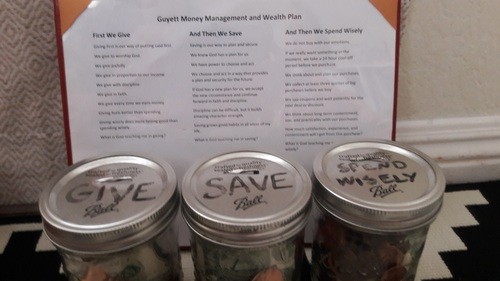
Picture a two-year-old child learning to manage three pennies. First, one penny goes into the "give" jar. Then one into the "save" jar. Finally, one into the "spend wisely" jar. This simple ritual, taught early and repeated often, transforms money from a source of anxiety into what it was always meant to be: a tool, not a master.
When children learn this pattern from their earliest days, money becomes normalized. It's not evil. It's not a god to worship. It's simply a resource to be managed with wisdom, gratitude, and intentionality. The question for many of us is: why didn't we learn this lesson earlier? And more importantly, is it too late to start now?
When children learn this pattern from their earliest days, money becomes normalized. It's not evil. It's not a god to worship. It's simply a resource to be managed with wisdom, gratitude, and intentionality. The question for many of us is: why didn't we learn this lesson earlier? And more importantly, is it too late to start now?
The Heart of the Matter
At the core of giving is a profound theological truth: everything we have comes from God. He is the Creator who spoke the universe into existence. He is the Sustainer who holds all things together. He is the Redeemer who sacrificed Himself for your restoration. When we truly grasp this reality, giving becomes not a burden but a natural response of gratitude.
Consider Abraham, who lived before the Mosaic Law was ever given. In Genesis 14, after defeating the kings, Abraham gave a tenth of everything to Melchizedek, priest of God Most High. This wasn't required by any commandment—it was a voluntary act of devotion, a recognition that his victory and his blessings came from God alone.
Jacob made a similar vow at Bethel, promising to give God a tenth of all he received. These patriarchs understood something fundamental: acknowledging God's ownership through giving demonstrates where our true hope lies.
Consider Abraham, who lived before the Mosaic Law was ever given. In Genesis 14, after defeating the kings, Abraham gave a tenth of everything to Melchizedek, priest of God Most High. This wasn't required by any commandment—it was a voluntary act of devotion, a recognition that his victory and his blessings came from God alone.
Jacob made a similar vow at Bethel, promising to give God a tenth of all he received. These patriarchs understood something fundamental: acknowledging God's ownership through giving demonstrates where our true hope lies.
The Cosmic Principle
This principle of giving before receiving isn't limited to spiritual matters. It's embedded in the cosmos itself. In fitness, you must give effort before you receive results. In relationships, you must give love, time, and attention before you receive connection and intimacy. Even in business, successful entrepreneurs understand they must invest—give—before they can profit.
Scripture reinforces this throughout. Proverbs 3:9-10 instructs us to "Honor the Lord with your wealth, with the firstfruits of all your crops; then your barns will be filled to overflowing." Notice the sequence: first the giving, then the overflow. Not the leftovers after we've satisfied all our wants, but the firstfruits—the best portion, given first.
Scripture reinforces this throughout. Proverbs 3:9-10 instructs us to "Honor the Lord with your wealth, with the firstfruits of all your crops; then your barns will be filled to overflowing." Notice the sequence: first the giving, then the overflow. Not the leftovers after we've satisfied all our wants, but the firstfruits—the best portion, given first.
The Malachi Challenge
Perhaps the most direct passage about tithing appears in Malachi, where God accuses Israel of robbing Him by withholding tithes and offerings. Then comes a remarkable challenge: "Bring the whole tithe into the storehouse. Test me in this and see if I will not throw open the floodgates of heaven."
This is one of the few places in Scripture where God actually invites us to test Him. He's so confident in His provision and generosity that He essentially says, "Try me. See if I won't bless you abundantly."
But there's a critical heart component here. Jesus later rebuked the Pharisees who tithed meticulously—even their herbs and spices—but neglected justice, mercy, and faithfulness. They had turned tithing into a mechanical ritual devoid of genuine devotion. Jesus affirmed tithing but emphasized that it must flow from a transformed heart, not dry religious obligation.
This is one of the few places in Scripture where God actually invites us to test Him. He's so confident in His provision and generosity that He essentially says, "Try me. See if I won't bless you abundantly."
But there's a critical heart component here. Jesus later rebuked the Pharisees who tithed meticulously—even their herbs and spices—but neglected justice, mercy, and faithfulness. They had turned tithing into a mechanical ritual devoid of genuine devotion. Jesus affirmed tithing but emphasized that it must flow from a transformed heart, not dry religious obligation.
Breaking Free from Being Your Own Savior
For many, especially men, there's an identity wrapped up in being your own savior. Society celebrates the self-made person who pulls themselves up by their bootstraps. But this mindset creates an exhausting burden—the pressure to control everything, to be responsible for every outcome, to essentially play God.
The truth is simpler and more liberating: you are not God. There is one true God, and you're not Him.
When you tithe—when you give that first ten percent—you're making a powerful declaration. You're saying, "God, You are in control of my finances. I trust You with my provision. I acknowledge that without Your breath in my lungs, Your sustaining power, and Your blessings, I would have nothing."
This removes the crushing weight of self-reliance. It shifts your identity from stressed-out controller to grateful steward.
The truth is simpler and more liberating: you are not God. There is one true God, and you're not Him.
When you tithe—when you give that first ten percent—you're making a powerful declaration. You're saying, "God, You are in control of my finances. I trust You with my provision. I acknowledge that without Your breath in my lungs, Your sustaining power, and Your blessings, I would have nothing."
This removes the crushing weight of self-reliance. It shifts your identity from stressed-out controller to grateful steward.
The Practical Journey
Making this shift isn't easy, especially if you've been taught that religion is a scam or that churches just want your money. Corruption exists, certainly. But the principle remains true regardless of human failings and sin.
The journey often begins with a heart issue that needs confession and repentance. Perhaps you've viewed God as a cosmic slot machine—pull the right levers, and blessings come out. Or maybe you've believed the lie that your blessing is truly yours, earned entirely by your effort.
The transformation happens when you realize every paycheck, every opportunity, every breath is a gift. When that dollar comes in, the immediate response becomes: "Thank You, Lord, for this dollar. Here's a dime given in thanks for the whole dollar." A thousand dollars? "Thank You, Lord. Here's a hundred."
At first, it feels mechanical and difficult. But over time, as faithfulness becomes habit, something remarkable happens. Your heart of faithfulness are filled to overflowing like the barns of Malachi's prophecy. The God of truth, goodness, and beauty, is more faithful than we deserve, and is more giving than than we could ever know.
The journey often begins with a heart issue that needs confession and repentance. Perhaps you've viewed God as a cosmic slot machine—pull the right levers, and blessings come out. Or maybe you've believed the lie that your blessing is truly yours, earned entirely by your effort.
The transformation happens when you realize every paycheck, every opportunity, every breath is a gift. When that dollar comes in, the immediate response becomes: "Thank You, Lord, for this dollar. Here's a dime given in thanks for the whole dollar." A thousand dollars? "Thank You, Lord. Here's a hundred."
At first, it feels mechanical and difficult. But over time, as faithfulness becomes habit, something remarkable happens. Your heart of faithfulness are filled to overflowing like the barns of Malachi's prophecy. The God of truth, goodness, and beauty, is more faithful than we deserve, and is more giving than than we could ever know.
Where Your Money Goes, Your Heart Follows
When you give consistently to your church, something interesting happens: you become invested. You learn to love and forgive each congregant. You learn about the struggles and victories of your church's people and leaders. You connect with the community. Your priorities shift from entertainment and accumulation to spiritual growth and kingdom impact.
You begin to care more about the work of God than the latest celebrity gossip. Your mind shifts toward eternal things rather than temporary distractions.
You begin to care more about the work of God than the latest celebrity gossip. Your mind shifts toward eternal things rather than temporary distractions.
The Invitation
The cosmos our Triune God created operates on a principle of giving before receiving. It's written in Scripture from Genesis to Revelation. It's demonstrated in the lives of patriarchs, prophets, and apostles. Even secular success stories confirm this truth through God's common grace.
The question isn't whether this principle works—it's whether you'll trust it enough to act on it.
First we give. Then we save. Then we spend wisely. This simple pattern, practiced consistently, can transform your relationship with money, with God, and with yourself. It removes the pressure, increases your faith, and positions you to receive what pleases God to pour into your life.
The journey begins with a choice: Will you continue trying to be your own provider, or will you acknowledge the true Source of all blessing and respond with grateful, joyful giving?
The question isn't whether this principle works—it's whether you'll trust it enough to act on it.
First we give. Then we save. Then we spend wisely. This simple pattern, practiced consistently, can transform your relationship with money, with God, and with yourself. It removes the pressure, increases your faith, and positions you to receive what pleases God to pour into your life.
The journey begins with a choice: Will you continue trying to be your own provider, or will you acknowledge the true Source of all blessing and respond with grateful, joyful giving?
Recent
A Short Scriptural Summary of Raising Children in the Lord
August 14th, 2026
93 Scriptures Directing Us to Sing: Sing for Worship, Praise, and Joy from Genesis to Revelation
August 8th, 2026
The Wisdom of Seeking Godly Counsel in Your Financial Discipleship Journey
June 12th, 2026
The Sacred Gift of Work: Discovering Purpose in Your Daily Labor
June 8th, 2026
Investing for Eternity: Building a Legacy That Lasts
May 29th, 2026
Archive
2026
January
February
May
June
2025
November
December
Memorializing Sacrificial Love for Freedom in SandpointWhy Rites of Passage for Our Children?Piano-Moving and Proper Priority of God, Wife, Children, Church, Community, and NationWithout Truth, Love Means NothingThe Profound Divide: Agape vs. ErosPersonal Reflections on the Question, "By What Standard?"Personal Reflections on Value, Worth and DiscipleshipPersonal Reflections on The Habit of Sin and The Habit of SubmissionUnderstanding Where We Came From Before Judging Where We Are - A Duty for Every Well-Thinking ChristianImagine a World Where You Didn't Encounter Deception but Only God's TruthDiscipled in Christ Origin Story with Aaron Guyett and Steve Stary
No Comments